
Online Trainings
Developing a Local Housing Strategy
How Can Localities Better Understand Local Housing Needs?
A housing needs assessment that analyzes the housing challenges facing the locality is an important step in developing a comprehensive local housing strategy. In preparing to conduct a housing needs assessment, a locality should consider what questions it has about its housing market and what key issues it faces or may face soon that it wants to address through a local housing strategy. The locality will likely need to use a combination of national and local data sources for the assessment.
The tiles below describe some of the key topics to explore in a housing needs assessment that can be informed by nationally available data accessed by the Housing Needs Assessment Tool. Click each topic below to learn more.
Insufficient production is a common cause of worsening housing affordability. To help understand whether housing production is keeping up with a locality’s needs, it can compare housing production with the growth rate of the locality’s population and job base. Suppose the population or total jobs in a locality is rising and not matched by a similar increase in housing production. In that case, demand for existing housing will increase, and housing prices will generally rise.
Examining the characteristics of its existing housing stock can help a locality understand the variation in the available housing types and identify gaps to address specific housing needs.
A locality must ensure it has adequate affordable housing to address its population’s needs, including dedicated affordable housing with binding rent or income restrictions or both. Without sufficient, dedicated affordable housing, lower- and middle-income households in a locality may be unable to afford rent and other necessities, and homelessness may increase.
Localities should understand the extent to which renters have unsustainable rent burdens. A healthy housing market provides diverse housing options, including rental units affordable to households of different incomes. Households facing burdensome rents may be at risk for displacement or homelessness or may forego necessities like food or healthcare to pay rent.
Owning a home creates opportunities to promote stability and build wealth for households. Localities should examine how well households of varying incomes can access and maintain homeownership. If homeownership is unaffordable in a locality, people may delay or give up on purchasing a home, pay a burdensome share of their income to buy a home, or move to more affordable areas far from their place of employment or desired location. Such moves can result in longer commutes and increased energy use and greenhouse gas emissions.
Considering variations in income, housing, and other data across different neighborhoods within a locality helps identify areas that may face segregation, gentrification, decline, destabilization, and other issues. It can also help localities determine what areas most need housing-related assistance, funding, and programs.
Many older adults are on a low fixed-income. They may have difficulty affording their rent or need assistance with routine maintenance or accessibility and safety improvements to remain in their homes. They also represent a sizable and growing share of the population in many localities, so understanding their housing challenges is important for clarifying the jurisdiction’s overall housing needs.
Once a locality has examined older adults’ housing needs, it can align available services with those needs. Localities may also wish to consider other target populations’ specific housing challenges, like single-parent households or households with a family member with a disability.
Many localities across the U.S. share a history of exclusionary and discriminatory housing policies. There is growing recognition of the continuing effects of these policies and practices and ways to counter resulting housing disparities. Disaggregating housing data by race and ethnicity can help policymakers and practitioners identify housing disparities in their communities and begin to design policies to address them.
In addition to determining its challenges, a locality must also understand the factors contributing to those issues to develop appropriate policy responses. Reaching out to knowledgeable local stakeholders is critical to understanding the root causes of housing problems.
Using the Housing Needs Assessment Tool
The Housing Needs Assessment Tool can help quantify the housing conditions and challenges in your city, town, or county. Developed by the Local Housing Solutions Team in partnership with PolicyMap, the tool uses Census data to visualize demographics and housing market data for every city and county in the U.S. It provides an easy way to access nationally-available data about your locality – which is an important part of a housing needs assessment.
Watch this video on the Housing Needs Assessment Tool.
Accessing Your Locality’s Housing Data
Want to check it out? To access your locality’s data, click the image of the search bar below.
Once your report is processed, a map will appear illustrating your geography in orange. You will also see an interactive table of contents for the rest of the report containing headings. Each of these headings is hyperlinked to that specific section of the report and includes specific data. Click each data type below to learn more and view report examples from various localities.
Data on age, racial and ethnic composition, disability, and socioeconomic status to help you better understand who lives in your locality
Lancaster, PA’s Poverty Rate
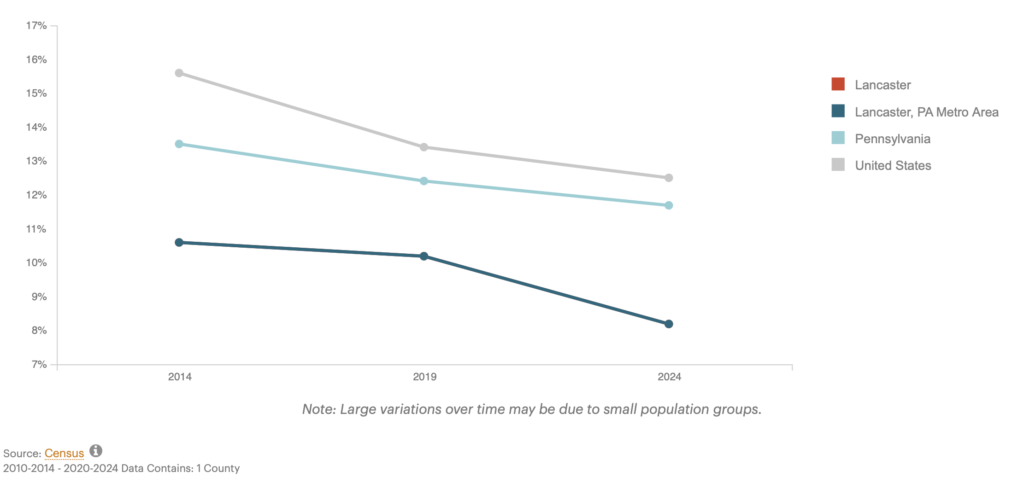
This example from Lancaster, PA, shows the city’s poverty rate decreased from 2019 to 2024 at a faster rate compared to that of Pennsylvania and the U.S. as a whole. Monitoring poverty over time is important for assessing a locality’s needs and considering policy responses.
Data that illustrates the extent of affordability problems experienced by renters
Bloomington, IN’s Cost-Burdened Renters
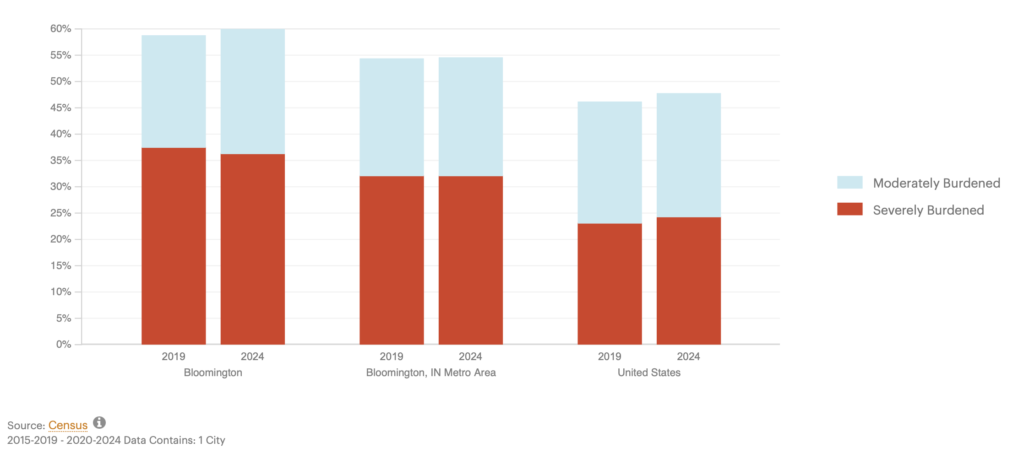
This example from Bloomington, IN, shows the share of renter households that are moderately or severely cost-burdened stayed consistent from 2019 to 2024. Examining how the share of cost-burdened renter households changes over time can help jurisdictions understand whether affordability problems are easing or worsening.
Data that illustrates the extent of affordability problems for homeowners
Riverside, CA’s Homeownership Rate
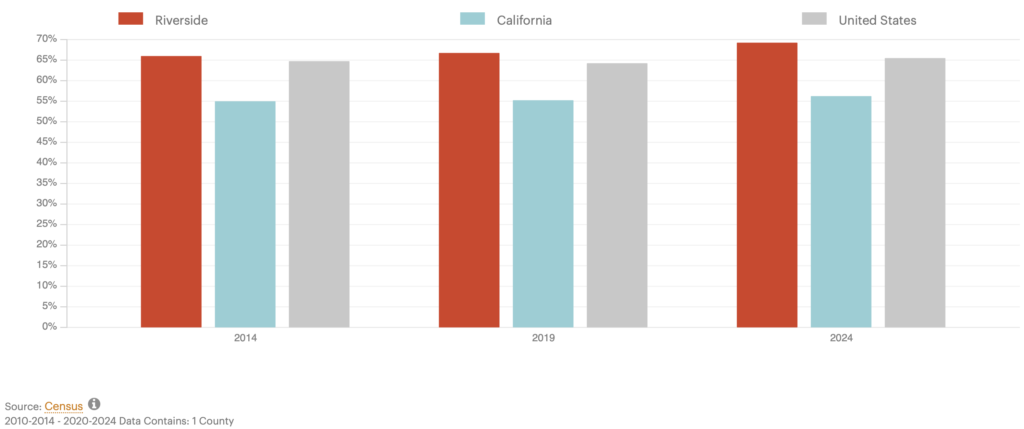
This example from Riverside, CA, shows the city’s homeownership rate is higher than California’s and the country’s as a whole, and it increased from 2014 to 2024. Localities experiencing a rate of change in homeownership rate that is substantially different from that of the state or nation should consider the local and regional context to determine whether this is a welcome, distressing, or neutral development.
Information on the amount and location of dedicated affordable housing. This is useful for understanding the resources available to meet local housing needs
Paterson, NJ’s Federally Subsidized Housing
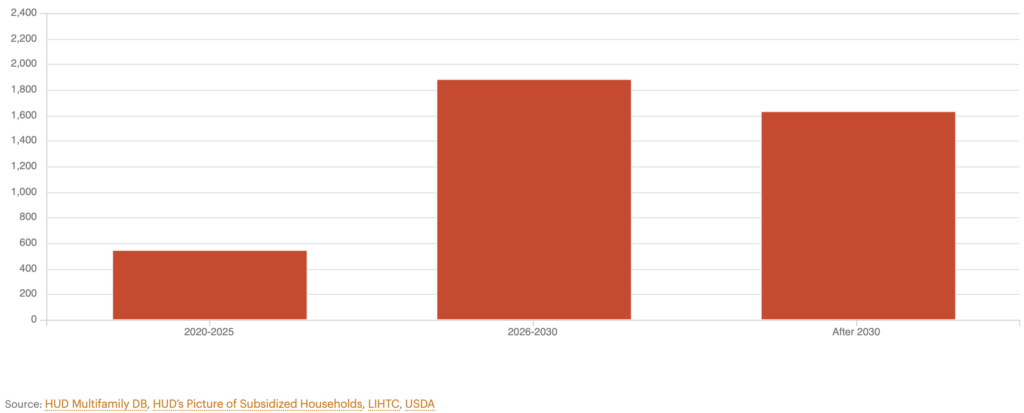
This example from Paterson, NJ, shows the number of federally subsidized housing units in the city with affordability restrictions set to expire by 2025 and 2030; if affordability restrictions are allowed to expire, some units’ rents will likely rise substantially and can reduce the city’s stock of affordable units, making this important to track.
Data that helps localities understand if housing supply is keeping pace with population and employment growth
Madison, WI’s Population Compared to Housing Production
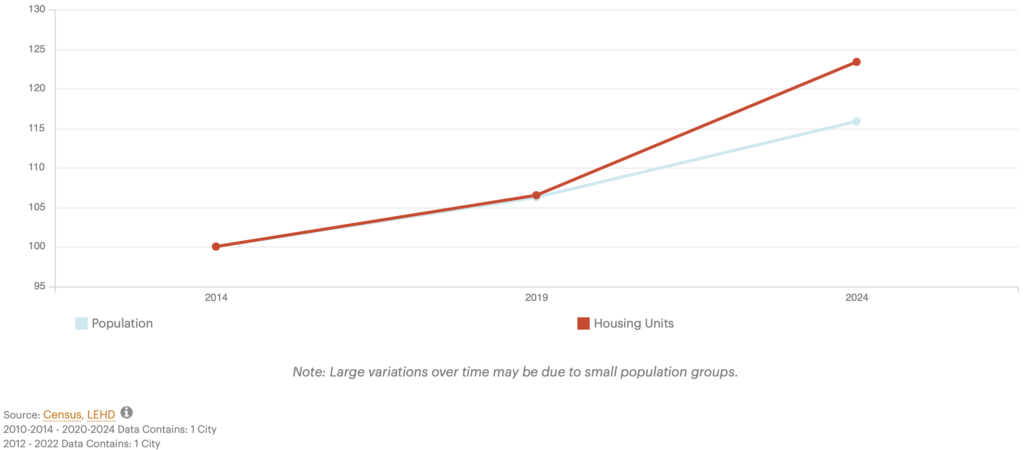
This example from Madison, WI, shows that, between 2019 and 2024, the city’s total number of housing units outpaces its increase in population. When the population is growing faster than the housing stock, generally the vacancy rate is declining or crowding is increasing. Localities should track this to help determine whether housing supply is keeping up with demand.
Data on the existing housing stock to help localities anticipate issues that may need to be addressed and identify mismatches between the types of housing available and residents’ needs
Kittitas County, WA’s Housing Stock
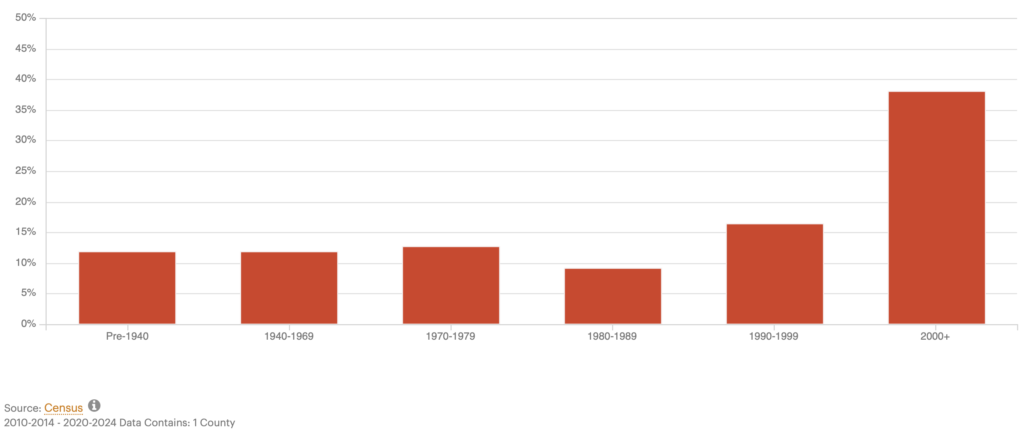
This example from Kittitas County, WA, shows when housing was built in the county, and that development has been trending up since 1990. All else being equal, older homes tend to require major capital investment or exhibit lower quality than newer homes, so examining the age of a locality’s housing stock can be helpful.
Data on neighborhood variations to illuminate patterns of poverty, segregation, and disparate access to resources
Savannah, GA’s Median Rents by Neighborhood
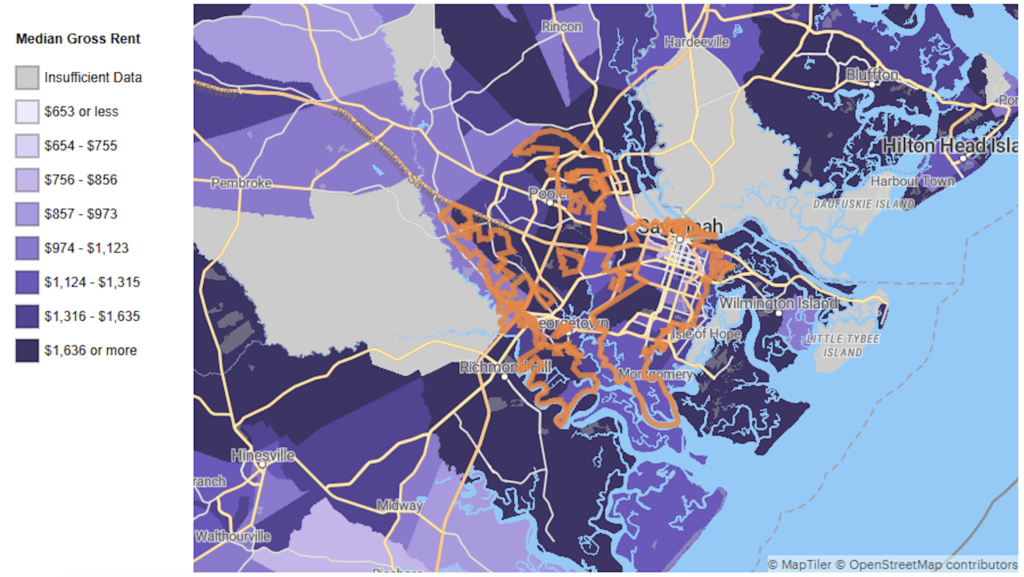
This example from Savannah, GA, shows how the median rents vary by neighborhood in the city. Areas with comparatively high median rents can be important locations to consider for new dedicated affordable rental units, and areas with low rents can be locations where it may be important to address the deterioration of housing quality.
Data to help localities understand the housing needs of older adults, who often face particular housing challenges
Davis County, UT’s Senior Households
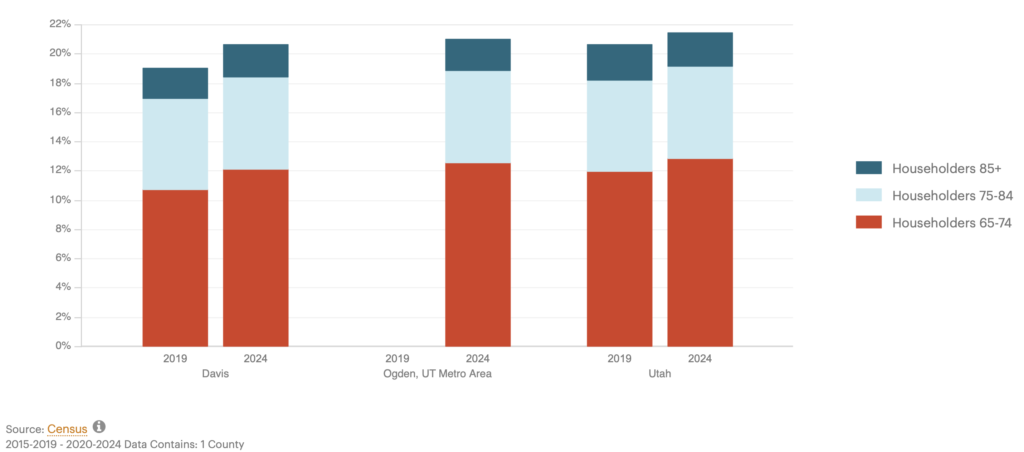
This example from Davis County, UT, shows the number of senior households grew in the county since 2015. Monitoring this trend can be helpful in identifying the potential need for new services or housing types for older adults.
Supplementing the Housing Needs Assessment Tool with Local Data
The nationally available data included in the Housing Needs Assessment Tool provide an important snapshot of a jurisdiction’s housing challenges, but these data don’t tell the whole story. Localities should combine this information with locally generated data to paint a more complete picture of the community’s housing needs.
Locally generated data serves two major purposes. First, it can supply information on key data points, such as building permits and home sales prices, that are not available in the national datasets used by the Housing Needs Assessment tool. Second, by conducting interviews, focus groups, and meetings with outside stakeholders and residents, localities can develop a more refined understanding of the most pressing housing challenges and learn more about the root causes of the locality’s housing challenges. In some cases, local data may also be more current than nationally available data, which can be important for tracking recent market changes, such as changes that lead to gentrification and displacement.
The availability of local quantitative data will depend on what the locality already captures. Most localities collect at least some data helpful for assessing housing needs, like building permits and code enforcement data. Other data, like tax revenue and foreclosure data, are usually collected by counties but may be available to localities. Additionally, other local agencies – including Continuums of Care and Public Housing Authorities – may have relevant data. When data are not readily available, consider looking to other jurisdictions, organizations, websites, local and regional stakeholders, and private sector firms to identify data to assist with a housing needs assessment.
Common Data to Supplement the Housing Needs Assessment Tool
Hover over each local data source to learn more about how it can help inform the locality’s understanding of local housing conditions and challenges. A more complete discussion on how to use locally generated data to inform a housing needs assessment is available in this brief, Unlocking the power of local housing data.
Building Permits and Certificates of Occupancy Data
Provide information on the amount and type of housing being produced or lost and allow for an examination of shortages in certain types of units (e.g., rental units, units with certain amenities, or units at certain price points).
Planning and Zoning Department Data
Provide information on the amount of remaining land available for housing development and help the jurisdiction anticipate pressures that may be put on the local housing supply. Data from local employers can help the locality anticipate pressures new jobs may put on supply. Data on vacant and abandoned units can help the locality better understand the potential and barriers to returning those properties to productive use for housing.
Property Tax Records
Provide information on housing characteristics, like the average number of bedrooms and bathrooms in homes, which can be compared to U.S. Census data on average household sizes for different population groups to determine whether the locality’s housing stock has enough homes that are the right size to fit the population’s needs.
Code Violation Data/Windshield Survey Data
Identify neighborhoods with a higher-than-average number of code violations or homes in a state of disrepair.
Resident Survey Data
Help inform housing policy development efforts by collecting information from residents about housing characteristics that affect the cost, safety, or livability of homes and the residents’ understanding of housing needs.
Dedicated Affordable Housing Data
Supplement national data with information on dedicated affordable housing that is locally subsidized or has local protections in place and with any plans to increase or decrease dedicated affordable housing. Data can come from the locality itself, other jurisdictions (e.g., county), land banks, community land trusts, or nonprofits, among others.
Rental and Home Sales Data
Supplement national data on housing costs and affordability by providing data on actual rents and sales prices of homes. Comparing the prices at which homes sell to the incomes of households in the jurisdiction will help clarify the extent to which households of different income levels can afford to purchase homes in the jurisdiction and whether the cost of buying a home is increasing faster than incomes.
Applying Community Health Data to Local Housing Strategies
The impact of housing on health is well documented, with a significant body of research demonstrating how housing influences individual and community health through the pathways of housing affordability, stability, quality, and neighborhood conditions. By examining local community health data, housing officials can further explore these connections to develop more comprehensive housing strategies that support healthy communities.
The City Health Dashboard provides a robust resource that housing stakeholders can use to examine data covering 40-plus measures of drivers of health for U.S. cities with 50,000 or more residents. The dashboard includes measures that shed light on how housing cost, quality, and other neighborhood factors influence community health. These factors include excessive housing costs, housing with potential lead risk, air pollution, park access, walkability, and access to healthy food.
Read this guest post on Housing Solutions Lab Notes, Applying Community Health Data to Local Housing Strategies, to learn more about the dashboard and how understanding key local health measures can help localities consider the potential impacts of their housing strategies on community health.
Using Stakeholder Input to Inform a Housing Needs Assessment
Local data obtained through surveys, focus groups, interviews, or similar engagement strategies are key to understanding residents’ perspectives. They can also tell a more compelling story about local housing needs than quantitative data alone can. Collecting stakeholder input is also beneficial to build public support for the policy actions needed to address local housing challenges.
Qualitative data can help localities better understand why newly created supply is not meeting demand. These data can include input from knowledgeable stakeholders, like developers, builders, and local officials, regarding construction costs; labor availability; regulatory impediments; land costs; and whether the local industry can produce what’s needed. Additionally, stakeholders can help identify the root cause of housing challenges – for example, is the key problem a shortage of land; overly restrictive zoning policies; a lack of development capacity; the city’s remote location; a lack of wastewater capacity; or something else?
We cannot overemphasize the importance of developing a big-picture understanding of the root causes of the locality’s housing challenges. While housing subsidies can be used to improve affordability in most situations, few communities have enough subsidy available to solve all of their housing challenges. By better understanding what is driving housing affordability or other housing challenges, a locality will be in a better position to mobilize other complementary tools to help stretch available subsidy out to help more families.