Policy Library
Weatherization assistance
Overview
Weatherization assistance programs provide low-income families with home modifications that increase energy efficiency, reduce energy costs, and ensure that their homes remain habitable throughout the year.
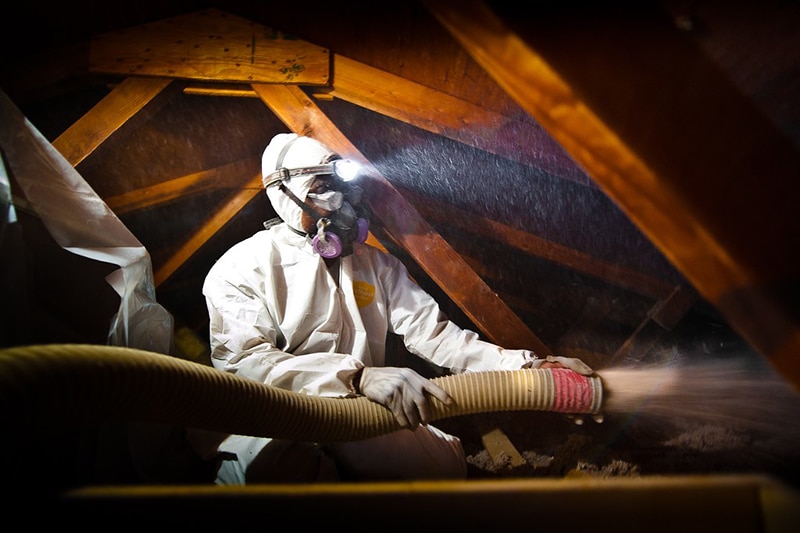
Many cities, towns, and counties use resources provided through the federal Weatherization Assistance Program to fund their weatherization programs, although state and local funds may also be used for these and other energy-efficient retrofits. The federal program covers the cost of an energy audit to review current performance and a series of approved measures that may include attic insulation, sealing of windows and doors, and modifying heating and cooling systems. These improvements are carried out by local providers, generally counties, local government agencies, and non-profit organizations, which usually operate under state supervision.
The federal Weatherization Assistance Program
The federal Weatherization Assistance Program (WAP) provides funding to increase energy efficiency in dwellings in which low-income persons reside with the ultimate goal of reducing energy expenditures. While this program was created by federal law and its funding is awarded by the U.S. Department of Energy (DOE), its implementation is carried out by the states—known as “grantees”—in conjunction with local providers such as local governments and non-profit organizations—known as “subgrantees.” The state grantees enter into contracts with these local providers to perform weatherization services.
The process whereby a dwelling is weatherized starts with an application submitted to the local provider. If the provider determines that the applicant meets the eligibility requirements, the next step will be to conduct an energy audit to identify the improvements from which the unit could benefit. The provider will then implement these improvements directly or through approved contractors. After the dwelling is weatherized, an inspection will generally follow. Weatherization improvements may include updating insulation of electrical, heating, or cooling systems, among others.
Eligibility
Federal and state statutes and regulations contain detailed eligibility requirements for weatherization assistance, leaving local providers little flexibility in their specific eligibility policies. Under the regulations issued by DOE, those who benefit from the WAP must meet a given definition of “low-income.” The state determines who qualifies as having “low-income” based on different criteria listed in the federal regulations (e.g., income at or below 200 percent of the poverty level, income level that is the basis on which certain cash assistance payments have been paid in the state). DOE regulations also specify that states must give priority to seniors, persons with disabilities, families with children, high residential energy users, and households with a high energy burden. Program funds may be used to weatherize the homes of both homeowners and renters; however, with respect to rental properties, states must ensure that the benefits of the program accrue primarily to the low-income tenants that reside in the property.
Funding
Funds for the federal WAP are currently granted by DOE, but both states and local jurisdictions may supplement this assistance with other sources of funds. For example, California employs a variety of funding sources for its energy efficiency and weatherization programs. For more details on California’s energy efficiency services, click here. In New York State, while the WAP is administered by New York State Homes and Community Renewal, a different agency, the New York State Research and Development Authority, provides additional economic resources for energy efficiency assessments and improvements in residential buildings. Click here for more information on these programs, which fall under the umbrella of Green Jobs – Green New York. With this context in mind, local providers can also assist residents in finding these other weatherization funding sources that may not be covered by the federal WAP.
Variations in how local providers may perform weatherization services
Even though federal and state restrictions limit the ability of local providers to decide how to implement weatherization assistance programs, these local actors still have some agency in how they perform their services. First, local providers can have different types of staffing models. A provider that weatherizes a high number of units per year may be able to have an in-house crew, whereas one that serves a small number of dwellings may find it preferable to use contractors. Second, providers can install a different suite of weatherization measures depending on the local climate—e.g., ceiling insulation in colder climates vs. rooftop solar in warmer areas. Third, while conducting adequate outreach activities is often required by the state, the local provider can usually decide how to best tailor its outreach to the area it serves. For example, in some localities it may be advisable to have information brochures and application documents in languages other than English. Smaller localities may benefit from state management or from working with a regional grantee or sub grantee to provide services.
More broadly, coordination between housing agencies, climate agencies, utility providers, and community-based partners can help localities align weatherization services with related housing, energy efficiency, and climate resilience programs. A 2025 Housing Solutions Lab report on how housing and climate agencies collaborate highlights strategies communities have used to structure partnerships, share data, and coordinate funding across housing and climate programs. For more information about the different ways in which local providers may perform their services, see Weatherization Works – Summary of Findings (p. 52 – 58).
Other considerations
WAP funding variability
It’s important to note that the amount DOE is able to assign to states and other grantees is based on the approved Congressional budgets for given fiscal years. In November 2021, President Biden signed the Infrastructure Investment and Jobs Act, which included $3.16 billion in expanded funding for WAP through 2026. In January 2026, President Trump signed a funding package that included a slight increase in WAP funding, bringing the program’s total funding to $329 million in fiscal year 2026.
Re-weatherization
The general rule is that, except for in cases where homes were damaged by natural disasters, dwellings weatherized after September 30, 1994 cannot receive additional weatherization services funded through the WAP. While states may authorize the use of WAP funds to weatherize dwellings that were weatherized before, or on, September 30, 1994, certain states give discretion to the local provider to decide if these types of units should be weatherized. A decision to do so may then be subject to final approval by the state or DOE. New York State grants local providers with decision-making power on whether to enhance previously weatherized dwellings through its Weatherization Assistance Program.
Examples
Seattle, WA’s HomeWise Weatherization Program provides a variety of energy improvements to qualified homes, such as insulation, air sealing, new energy-efficient refrigerators, and furnace repair or replacement. This program is available to both homeowners and renters, at no cost, as long as they meet income requirements. The program is supported by federal, state, and local utility funding.
New York State’s Weatherization Assistance Program provides weatherization services to renters, homeowners, and real property owners located in New York State through a network of local providers. The program is funded by DOE and the U.S. Department of Health and Human Services, and is administered by New York State Homes and Community Renewal (HCR). HCR’s Office of Housing Preservation published a comprehensive manual, revised in January 2026, that outlines the policy and procedures for the administration of the WAP in New York State.
Michigan and Alabama offer similar programs to New York, serving eligible low-income households. In Michigan, the Department of Health and Human Services supervises the initiative, and the home improvements are provided at no cost to the residents. In Alabama, the state’s Department of Economic and Community Affairs oversees the program to reduce utility costs for low-income households. In both states, typical measures covered include installing insulation in walls and floors, curbing air filtration, sealing ducts, and repairing heating and cooling units (including furnaces or water heaters). In December 2025, Alabama’s Governor approved over $3.8 million in new grant funding for this program to 13 agencies across the state.
Austin, TX’s Weatherization Assistance Program provides free weatherization assistance to qualifying Austin Energy customers. After a home energy assessment, qualifying homes will receive improvements by contractors to reduce energy use.
Related resources
Useful pages for cities, counties, and residents:
- Strengthening Local Home Repair Systems: Lessons from 15 U.S. Cities and Counties, Housing Solutions Lab (2026) – This Policy Insight examines how local governments and nonprofit partners coordinate home repair programs, including efforts to combine funding and align repair assistance with broader housing preservation, affordability, and neighborhood goals.
- Weatherization Program Notices and Memorandums, U.S. Department of Energy – This page, updated regularly, provides active and archived notices that establish the framework for administering WAP funds.
- Weatherization Energy Audits, U.S. Department of Energy – As noted above, the federal program requires all grantees to conduct an energy audit specific for single-family homes, mobile homes, and multifamily dwellings. This page offers more guidance on how to prepare these audits.
- How To Apply for Weatherization Assistance, U.S. Department of Energy – This page provides guidance on eligibility for weatherization services, steps to identify local providers, and guidelines to complete the weatherization assistance process. It also includes a national map with links to state-specific weatherization websites.
Evaluation of the WAP
- Health and financial benefits of weatherizing low-income homes in the southeastern United States, Journal of Building and Environment (2021) – This study estimates the non-energy effects of weatherizing low-income homes in Knoxville, TN. The authors found positive outcomes: after weatherization, houses maintained healthier temperatures and we less dusty and drafty. Furthermore, respondents reported improvements in their physical and mental health.
- Weatherization Works – Summary of Findings from the Retrospective Evaluation of the U.S. Department of Energy’s Weatherization Assistance Program, Oak Ridge National Laboratory (2014) – This brief analyzes of the WAP’s accomplishments in program year 2008, which encompasses the period between April 2008 and June 2009.
- Do Energy Efficiency Investments Deliver? Evidence from the Weatherization Assistance Program, NBER (2015) – This paper analyzes the energy savings derived from the implementation of weatherization improvements under the WAP and compares them with existing projections.
More Publications
Learn more about what The Lab has to offer.