Case Studies
Transforming spaces: Examples of adaptive reuse from Windsor Locks, Connecticut; Buffalo, New York; and Alexandria, Virginia
Overview
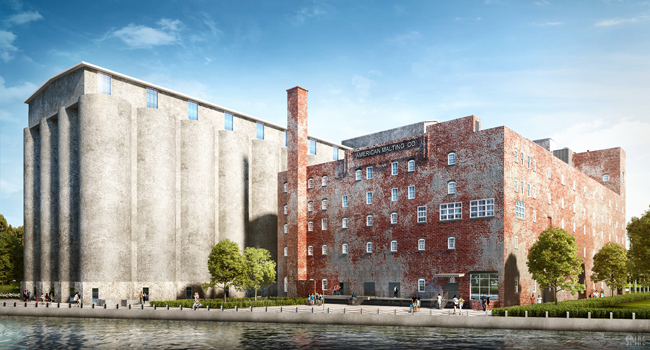
Adaptive reuse entails repurposing an existing building for a new use. This process can contribute to increasing the housing supply by converting facilities such as schools, hotels, offices, or other commercial buildings to residences. Adaptive reuse has other benefits, including returning vacant or underutilized properties to a more productive use, protecting historic buildings from neglect or demolition, and reducing the carbon footprint brought on by development.
Localities can play an important role in supporting adaptive reuse projects, such as by adjusting zoning or building permitting regulations that may prevent conversions from one use to another or providing economic incentives to change a property’s use from non-residential to residential. This three-part case study series describes how localities have used innovative policies or programs to facilitate conversion projects to create residential properties. The case studies cover:
Windsor Locks, Connecticut: Converting a former mill into mixed-income apartments
Faced with the challenge of revitalizing their downtown without destroying historic buildings, policymakers in Windsor Locks responded to residents’ suggestions to repurpose an underutilized, 100-year-old mill in the center of downtown. Enabled by zoning changes and supported by public and private funding, the town encouraged a developer to turn the mill into a mixed-income apartment building. This case study explores how the town facilitated the developer’s vision for adapting the mill into apartments to add to the town’s housing stock and help rejuvenate the downtown area.
Buffalo, New York: Adaptive reuse of vacant industrial and commercial properties
In the early 2000s, Buffalo, NY, was home to numerous vacant or blighted historic buildings that depressed activity in the central business district. Recognizing that repurposing these buildings could attract new investment to Buffalo and strengthen the tax base, the Erie County Industrial Development Agency created an Adaptive Reuse Program that used tax incentives to encourage private investment in the city’s abandoned properties. This case study describes the program’s design and evolution from a tool for economic development into a multifaceted program that also drives the creation of affordable housing.
Alexandria, Virginia: Facilitating office-to-residential conversions
In Alexandria, VA, a 2017 fiscal impact analysis eased city concerns that shifting the focus from office and commercial development to residential development would harm its budget and lead to an imbalance between incoming property tax revenue and increasingly costly city services. Several years later, a cultural shift towards remote work after the COVID-19 pandemic left the city with a surplus of underutilized office buildings. Spurred by past success and the post-pandemic surge of empty office space, Alexandria has intensified its efforts to support adaptive reuse projects, resulting in 15 office-to-residential conversion projects. This case study details the city’s 30-year history of policies that encouraged adaptive reuse projects.
Windsor Locks, CT: Converting a former mill into mixed-income apartments
Overview
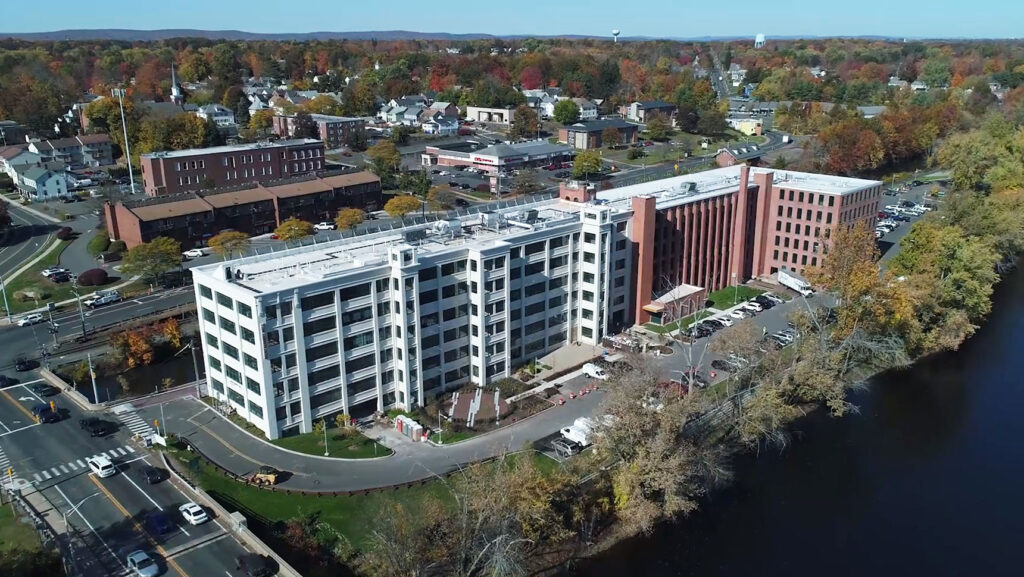
In 2017, a developer working in Windsor Locks, CT, began converting a vacant mill in the town center into mixed-income apartments, with half of the units reserved for below-market rates. This project, a key milestone in a decade-long effort to revitalize the historic downtown, highlights the collaboration between the town and a developer to repurpose the industrial building.
Key takeaways
- Creative policy changes may be necessary to enable adaptive reuse projects. This project was made possible by the locality’s tax and zoning policy changes. The town’s enabling policies were its planning commission’s Main Street Overlay Zone and a downtown Tax Increment Financing District.
- Localities can facilitate developers’ use of various funding sources for adaptive reuse projects. This project was funded by a combination of local, state, and federal funds, along with private funding. The requirements attached to some of these funding sources informed the final project’s mixed-income rental strategy.
Description
In 2008, Windsor Locks surveyed residents about their vision for the town’s waterfront and downtown area. Among the responses were suggestions to find a new use for the historic Montgomery Mill located between a river and a canal near the town center. The mill was part of a tinsel thread manufacturing facility from 1871 to 1990 but remained mostly vacant after that and was fully abandoned at the time of the site’s sale and redevelopment. Residents wished for the mill to be preserved and reused, especially since previous revitalization efforts in the town had resulted in the demolition of many historic structures.
Because the mill sits on a central, visible site along Main Street, the town hoped that converting it into a vibrant, active space that could spur similar efforts throughout the waterfront and downtown area. Using the mill for affordable housing for local workers, as well as those commuting to Hartford or Springfield, supports the State of Connecticut’s goal of linking workers to job centers through transit-oriented development.
Key steps and approaches to completing the Montgomery Mill project are described below.
Removing zoning barriers
In 2013, the town amended its downtown’s zoning requirements by creating a historic overlay zone called the Main Street Overlay Zone. The new zoning regulations promoted building conversions or infill development with characteristics such as public spaces, high density, mixed uses, pedestrian accessibility, and architecture with historic character. The overlay zone has several provisions intended to encourage this type of redevelopment, including allowing street parking and shared parking spaces to count toward parking requirements, reducing minimum setback requirements, and removing maximum density limits for adaptive reuse projects. The town intended for these changes to spur the revitalization of its downtown buildings, including but not limited to Montgomery Mill. After these zoning changes, an adaptive reuse project at Montgomery Mill to convert the space to residential use was aligned with the town’s development guidelines and requirements.
Tax Increment Financing (TIF) for the project
Enabled by Connecticut state policy, the town adopted a tax increment financing policy in 2016 and established a Tax Increment Financing District along Main Street to encourage construction in the downtown area. TIF is used to promote economic development as follows: first, the municipality estimates the extent to which redevelopment of the area will increase the assessed value of the area in the future; second, the municipality takes that expected additional tax revenue generated from the area based on higher assessments and reserves that amount to invest in the property. This investment is usually implemented by promising to use that reserved amount to pay off a debt-based financing tool for the economic development project.
Adopting this financing structure was another of the town’s steps toward enabling its vision of a revitalized downtown, allowing it to contribute additional debt financing for the Montgomery Mill project. In Windsor Locks, the town and the developer did this through an agreement with a lender: the town gave the developer a tax credit for a percentage of the incremental real estate taxes the developer would have paid in the future, and the developer used these promised tax credits as leverage for a loan with a lender to secure $550,000 upfront to help finance the property.
Obtaining additional public and private funding sources
The Montgomery Mill project was funded by numerous private and public sources. Because the State of Connecticut identified the project as a priority for transit and economic development, and the planned relocation of the town’s train station aligned with the state’s goal of connecting workers to job centers, the town and developer successfully secured funding from several state agencies. These included the Departments of Transportation, Environmental Protection, Housing, and Economic and Community Development, as well as the Housing Finance Authority and the Historic Preservation Office.
The project’s total cost was $63 million, which included funding from a combination of private debt and equity sources and local, state, and federal agencies. Federal contributions came from federal historic tax credits from the National Park Service. State contributions included state historic tax credits from the Connecticut State Historic Preservation Office, Low-Income Housing Tax Credits from the Connecticut Housing Finance Authority, Brownfields Program funds and Urban Act funds from the Connecticut Department of Economic and Community Development, and debt from the Connecticut Department of Housing.
Table 1. Financing Montgomery Mill Redevelopment Into Apartments
Source: Adapted from the Housing and Urban Development publication about Montgomery Mill.
In addition to helping the developer leverage more debt for the project through the town’s Tax Increment Financing District, the town also facilitated additional cost savings and loans. In particular, it reduced sewer connection fees for Montgomery Mill, and the town itself served as a non-profit recipient of the state’s Urban Act funds from the Department of Economic and Community Development. The town, in turn, loaned these funds to the project. Connecticut’s Urban Act grant program is for municipalities to expand on state efforts to promote development, community conservation, and quality of life for urban residents.
Addressing environmental and site access concerns
Before construction could begin, brownfield remediation was necessary to make the mill safe for habitation, as prior industrial use had left toxins at the site. The State’s Department of Economic and Community Development’s Brownfields Program funded the remediation.
Due to flood risk and requirements for emergency access, the site was reconfigured. The developer and town created a design that included elevating all building equipment in the basement and creating a permeable-surface back-up parking and emergency access area at an elevated height in a public park directly adjacent to the mill. In case of flooding, the back-up parking area would be available, and all the building’s residences and mechanical equipment would be outside the 500-year floodplain. Other spaces in the basement were designed to be resilient to flooding.
Designing a mixed-income strategy
Project funds from state and private investors were restricted in the number and type of affordable housing units included, which led the developer to use a mixed-income rental strategy. The completed project has 160 units in total, with half priced at market rates and the other half below market rates. The below-market-rate units are designed to be affordable for households earning between 25 and 80 percent of the area median income (AMI).
Because the project was funded with Low-Income Housing Tax Credits, 65 of the below-market-rate units are restricted to tenants earning 25 to 60 percent of AMI for 40 years after construction. The 40-year restriction is required by the Extended Low Income Housing Commitment with the Connecticut Housing Finance Authority. Seventeen of the below-market-rate units are linked to a low-interest nonprofit lender and restricted to tenants earning up to 80 percent of AMI for 10 years after construction. Beacon Communities intends to keep the units affordable beyond the 10-year requirement.
Process and timeline
2008: Windsor Locks commissions a study to obtain policy recommendations for improving the economic viability of its downtown area and encourage dense development in keeping with its historical character.
2012: Town approves amendments to zoning for downtown that went into effect in 2013 to establish the Main Street Overlay Zone (MSOZ).
2015: State of Connecticut enacts a law that allows localities to establish tax increment financing districts.
2016: Town adopts policy that enables Tax Increment Financing Districts so the municipality can use property taxes from certain locations to fund eligible municipal activities.
2016: Developer Beacon Communities submits funding application to the state for remediating and adapting the historic mill facility into a mixed-income apartment building.
2017: Financial closing for developer Beacon Communities.
2018: Construction begins at apartment site and at the town’s Complete Streets pedestrian connectivity improvement sites.
2019: Construction is complete. Montgomery Mill Apartments rental units open and residents begin to move in.
Outcomes
In addition to creating 160 units, including long-term affordable housing near regional transit, project outcomes include brownfield remediation that made the area safe for habitation and recreation, and the installation of flood-resilient design of building equipment and systems.
In 2020, developer Beacon Communities won the Urban Land Institute’s Jack Kemp Excellence in Affordable and Workforce Housing Award for the Montgomery Mill Apartments adaptive reuse project. As of 2024, the town’s Main Street Overlay Zone–one of the policies that supported the Montgomery Mill project–was supporting a similar proposed redevelopment on the same street.
Policy significance
The success of Montgomery Mill’s adaptive reuse came in large part from the town’s flexible approach, as well as open communication among town departments, state agencies, and the developer. Localities seeking to increase housing density and affordability in a particular neighborhood may consider creating a special zone in their regulations for development that matches this vision, similar to Windsor Locks’ Main Street Overlay Zone. Where allowed by state law, localities may also consider designating a neighborhood for collaborative development investments through an economic incentive policy such as Windsor Locks’ Tax Increment Financing Policy. For adaptive reuse of historic structures, localities may be able to secure federal and state historic tax credits for redevelopment. Finally, projects that provide guaranteed long-term affordable units can leverage various state affordable housing programs, including debt financing and low-income housing tax credits.
Additional information
- Windsor Locks, Connecticut: A Mill’s Transformation Into Mixed-Income Housing Is Revitalizing the Downtown. This is a Housing and Urban Development Case Study of the Montgomery Mill project, which includes before-and-after photos.
- Jack Kemp Excellence in Affordable and Workforce Housing Awards 2020 Winner: Montgomery Mill. The Urban Land Institute’s description of the award summarizes the Montgomery Mill project.
Buffalo, NY: Adaptive reuse of vacant industrial and commercial properties
Overview
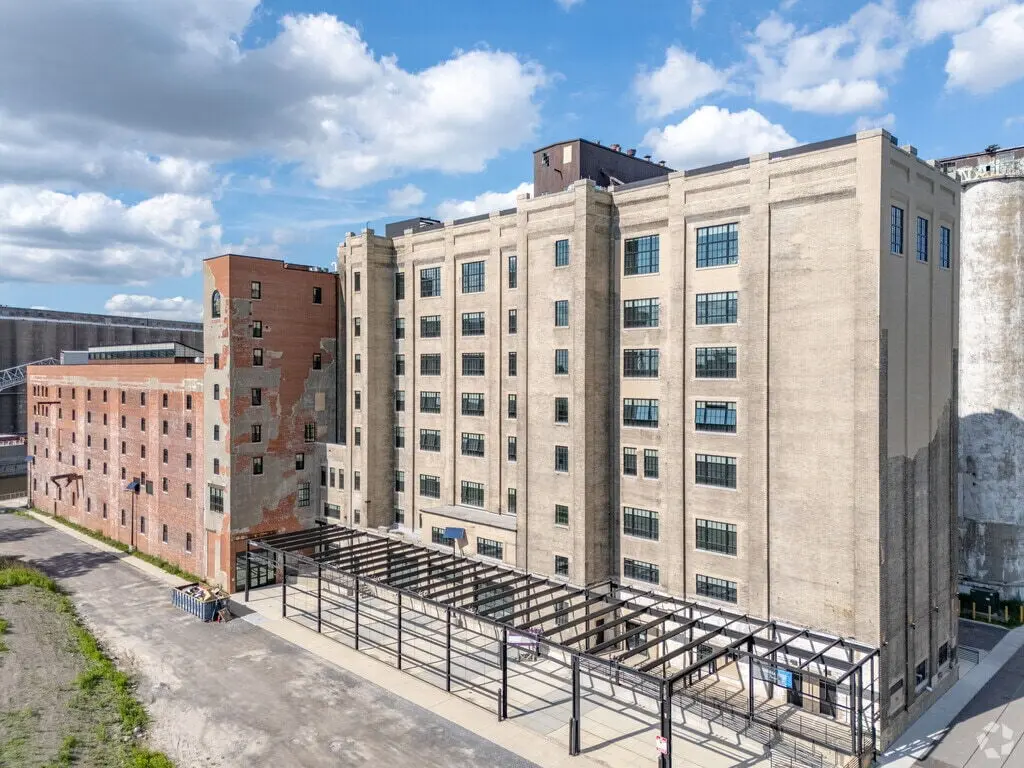
Since 2008, the Erie County Industrial Development Agency (ECIDA) has administered an Adaptive Reuse Program, which provides a variety of tax incentives to developers to support the revitalization of vacant and underutilized properties. The program was initially conceived as an economic development strategy designed to combat blight and attract new investment in and around the City of Buffalo. While housing is not the program’s key focus, it has nonetheless been instrumental in facilitating the development of market-rate and affordable housing in downtown Buffalo and the surrounding area.
Key takeaways
- Tax incentives can be a valuable tool for localities to catalyze development. ECIDA’s Adaptive Reuse program offers tax incentives to spur redevelopment of vacant and underutilized industrial and commercial buildings
- Adaptive reuse strategies can incorporate housing, retail, commercial development, and public space. While the program was not initially conceived as a housing development tool, many of the projects that received tax incentives through it included a residential component, which has catalyzed the development of mixed-use neighborhoods in Buffalo and throughout Erie County.
- To maximize impact, adaptive reuse projects can employ different funding streams. The Adaptive Reuse Program is frequently layered with other state and local resources for redevelopment, including historic preservation tax credits and environmental remediation funds. By taking advantage of the variety of programs available for place-based investments, developers can create projects that provide a range of benefits to the community.
Description
The Erie County Industrial Development Agency (ECIDA) is one of over 100 Industrial Development Agencies (IDAs) operating within New York State. IDAs are public benefit corporations that support economic development by offering financial incentives, such as tax abatements, to eligible businesses within their jurisdictions. ECIDA also offers loans, grants, and other financial support to encourage business development within the city of Buffalo and in other communities throughout Erie County.
Like many cities in the region, Buffalo has a large stock of historic industrial properties dating from the early twentieth century. However, by the early 2000s, many of these properties had fallen into disrepair or become vacant. These properties contributed to urban blight in the central business district, negatively impacting quality of life and community well-being. Moreover, these properties represented a major loss of property tax revenue for the city.
According to President and CEO of ECIDA, John Cappellino, the growing challenge of urban blight prompted local and regional policymakers to start exploring how ‘smart growth’ principles could drive investment back to downtown Buffalo and increase the economic vitality of the surrounding region. While ECIDA had previously played only a limited role in property development, the agency’s leadership recognized that adaptive reuse could be a valuable economic development strategy for the county: it could help attract more businesses to Buffalo, strengthen property values, bolster the local tax base, and reduce the public costs associated with demolition and remediation. However, it’s worth noting that adaptive reuse can also be more expensive than building new structures due to the additional costs of remediation and renovation, which may sometimes surpass the property’s value and the rental income it can produce.
To tackle this challenge, ECIDA launched the Adaptive Reuse Program in 2008. The program is designed to promote private investment in these properties by offering various tax incentives that help reduce initial development costs. For instance, projects can benefit from state sales tax exemptions on the purchase of construction materials and non-production equipment. Additionally, they can save up to 1 percent of the total mortgage amount on the usual one-time fee charged by Erie County when a mortgage is recorded. Eligible projects can also receive a temporary abatement on their property taxes in the form of a Payment in Lieu of Taxes agreement (PILOT). The PILOT term runs for five, seven, or ten years depending on the project’s size and anticipated economic impact. During this time, the property receives a significant tax abatement (up to 95 percent in the first year). This reduction slowly decreases over time, so that by the end of the term, the property owes full taxes based on the improved property’s value. This approach allows property taxes to increase gradually as the structure is improved, making it easier for developers to complete the project.
To be eligible for the Adaptive Reuse Program, a property must meet the following criteria: it must be at least 20 years old, present “functional challenges” to redevelopment—typically indicating that it needs significant repairs to meet current building codes—and must have been vacant or underutilized for at least three years, among other requirements. The focus on older properties in need of repairs means that many projects can take advantage of other statewide programs, including historic preservation tax credits, which can be used to offset up to 30 percent of the qualified costs associated with rehabilitating historic properties; tax credits from the Brownfield Cleanup Program that support environmental remediation; and the 485-a program administered by the City of Buffalo, which offers additional tax incentives for mixed-use conversion projects.
The Adaptive Reuse Program was not initially designed to catalyze housing development specifically; rather, the broad goal was to drive investment towards vacant and underutilized properties. Nonetheless, the program has created mixed-use properties incorporating residential, retail, and commercial spaces, supporting the development of nearly 2,000 apartments. Most of these units are market-rate, but as housing demand and rental prices in the Buffalo area have increased in recent years, ECIDA began to encourage developers to voluntarily include affordable units in their plans.
In 2024, ECIDA established a new affordable housing requirement for residential and mixed-use projects developed under the Adaptive Reuse Program. The requirement varies based on project size: for projects with 10 or fewer units, at least one unit must be affordable; for projects with 11 to 50 units, at least 10 percent must be affordable; for projects with 51 to 100 units, at least 15 percent must be affordable; and for projects with more than 100 units, at least 20 percent must be affordable.
To meet the requirement, units must be affordable to households with incomes below 80 percent of AMI. The affordability restriction remains in place for the duration of the PILOT term. ECIDA may waive the affordable housing requirement if it determines that meeting the requirement would compromise the project’s viability.
The program’s geographic scope has also grown over time. In its early stages, most projects were located in downtown Buffalo, where there was a concentration of large multi-story buildings. Over time, as many of the prime large-scale opportunities in the downtown core have been developed, the program has increasingly supported smaller-scale projects in ‘village centers’ outside of the downtown core.
Process and timeline
- 2003: The City of Buffalo developed The Queen City Hub: A Regional Action Plan for Downtown Buffalo. The plan lays out a comprehensive strategy for revitalizing downtown Buffalo, emphasizing the need for infill development and the potential for adaptive reuse of vacant and underutilized properties.
- 2003-2008: In the years following the development of the comprehensive plan, downtown Buffalo underwent several significant revitalization projects, including the expansion of the Buffalo Niagara Medical Campus and investments in the Erie Canal waterfront area. These projects helped draw further attention to the potential for redevelopment in downtown Buffalo, and local policymakers began to explore strategies to drive more investment towards the downtown core.
- 2008: In the context of growing support and interest in revitalizing downtown Buffalo, ECIDA launched the Adaptive Reuse Program with the goal of eliminating urban blight and encouraging infill development. While the program does not explicitly focus on housing development, many of the early projects included market-rate apartments.
- 2016: ECIDA published a report on the impact of the Adaptive Reuse Program from its inception in 2008 to 2016.
- 2020-2024: As residential demand in downtown Buffalo grew and rents began to climb, ECIDA began to consider how the Adaptive Reuse program could facilitate the development of affordable housing. ECIDA began requesting that developers include affordable housing set-asides in their projects.
- 2024: ECIDA amended the Adaptive Reuse Policy to include an affordable housing requirement. As of August 2024, projects with a residential component will include an affordable housing set-aside based on the project’s size.
Outcomes
The tax incentives offered through the Adaptive Reuse Program represent a relatively small portion of overall project costs compared to other subsidy programs. As of June 2024, the program has supported a total of 85 projects. These projects produced 1,985 apartments and 1.5 million square feet of commercial space. In total, the program has leveraged an estimated $975 million in private investment.
Policy significance
The ECIDA Adaptive Reuse Program illustrates how states can authorize a public benefit corporation to utilize novel tax incentives like state sales tax abatements and waivers from mortgage recording fees to encourage development. Likewise, these public benefit corporations can work with local governments to encourage development using PILOT agreements to ease property tax burdens during a project’s construction phase. These incentives can be used as a tool to encourage adaptive reuse that will help create new housing units, support commercial development, and preserve historic buildings.
Additional information
- Buffalo Niagara Partnership. This page features a profile of projects completed under the Adaptive Reuse Program.
- ECIDA mandates affordable housing as part of adaptive-reuse policy for incentives. This Buffalo News article includes coverage of ECIDA’s new affordable housing policy.
Alexandria, VA: Facilitating office-to-residential conversions
Overview
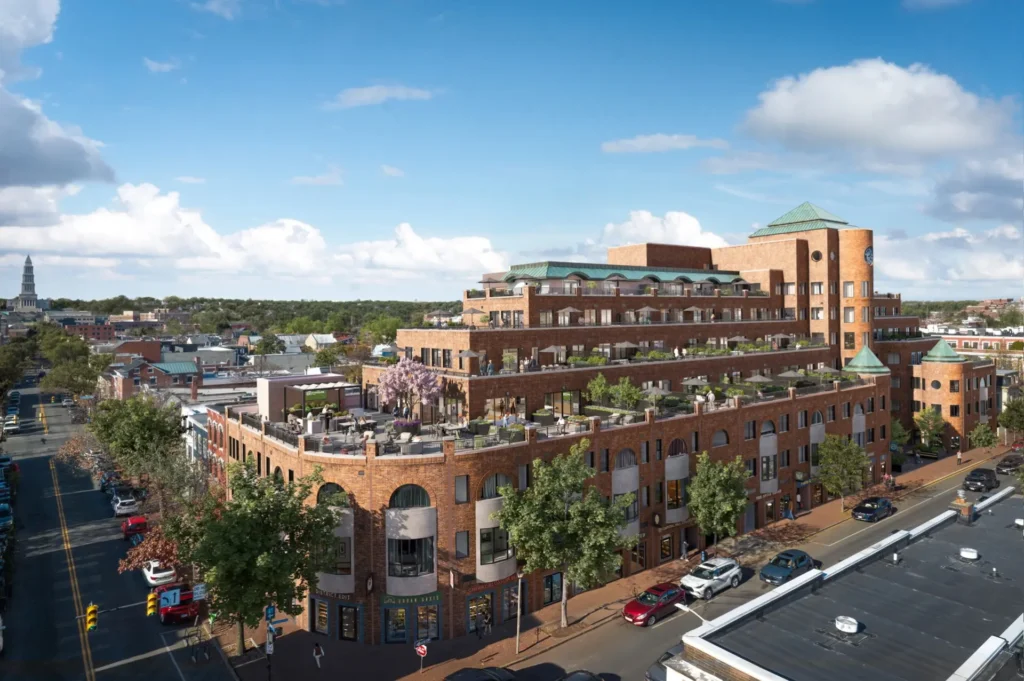
In recent years, Alexandria, VA, has seen the conversion of several office buildings into residential developments, some of which included affordable housing units. Over the past three decades, Alexandria has implemented various strategies that have contributed to the success of these conversion projects. Efforts intensified after a 2017 fiscal impact analysis found that four office-to-residential projects had significantly increased assessed property values. This increase led to greater property tax revenue, which offset the costs associated with providing services to residential buildings post-conversion. This case study describes the adjustments Alexandria has made to its land use policies and development review processes to better facilitate office-to-residential conversions.
Key takeaways
- Localities can benefit from conducting a thorough inventory of existing office spaces and assessing and addressing regulatory barriers that may prevent possible future adaptive reuse projects.
- Cities may need to modify long-standing operating norms and adopt a culture of ‘yes’ to support individual projects in navigating challenges.
- Because adaptive reuse projects often involve multiple departments (e.g., planning, zoning, permitting and inspections, public works, etc.), it can be helpful to establish an interdepartmental approach and streamlined workflow to align efforts and clarify who has decision-making authority to assist developers on projects.
Description
Alexandria, VA, located in metro Washington, D.C., has multiple office buildings that have historically housed federal clients and government contractors. However, shifts in U.S. market dynamics —particularly the rise of remote work after the COVID-19 pandemic— has reduced demand for office space by federal clients.
In an interview with Alexandria’s Department of Planning and Zoning, Planning Director Karl Mortiz and Chief of Development Robert Kerns explained that Alexandria has been taking steps that support adaptive reuse since zoning changes in 1992. However, it was not until a 2017 fiscal impact analysis that the city discovered that converting certain commercial space to residential space on a case-by-case basis would not lead to a loss in tax revenue.
During the past three decades, the city removed regulatory barriers, adopted a more flexible and proactive stance in supporting projects, and identified the benefits and challenges of office conversion. In particular, the city has made zoning changes, centralized management of zoning and permitting staff and processes, and deferred city fees during construction. The city focused on building neighborhoods where people want to live and used all external resources available, including federal and state funding.
Other factors that have helped facilitate office-to-residential conversions include walkable amenities and services near office spaces, ground floor retail space for amenities in new developments, city investment in neighborhoods where developers are building, a supportive Council and Planning Commission, and support from state and regional transit financing organizations to expand transit system availability near buildings.
Process and timeline
- 1992: The last comprehensive rewriting of Alexandria’s zoning ordinance occurred in 1992 and allowed administrative rather than discretionary approval of housing in every zone except industrial zones. Since that time, there have been incremental changes, including liberalizing building height limits, lowering parking requirements, relaxing definitions of open space, and increasing the allowable number of housing units per acre. In addition, in 1992, the City Council established the Alexandria Master Plan, which comprises 20 small area plans along with city-wide chapters that guide planning and decision-making regarding the development of the neighborhoods in the city. The small area plans and master plan are updated on an ongoing basis through amendments.
- 1995: Since 1995, the city has expanded its Affordable Set-Aside Program to allow developers to receive density and height bonuses in exchange for providing affordable housing or incorporating an arts or cultural tenant. However, to remain flexible with developers, the city will occasionally make exceptions to these requirements to ensure a project’s overall success.
- 1999-2000: The city began prioritizing the development of mixed-use, walkable urban communities and subsequently went neighborhood by neighborhood to create flexible small area plans to guide development in an area. Not only has this led to a concentration of amenities that make office conversions more feasible, but it also allows the Department of Planning and Zoning to have a clear vision for neighborhoods to make better judgments on new projects.
- Early 2000s: A developer was interested in converting the 1970s-era Sheet Metal Workers building into condominiums—now called The Oronoco. This conversion was completed with an administrative building permit review, which saved time and money relative to a legislative review. This project showed other developers that a relatively complicated office-to-residential conversion could happen in Alexandria. It also revealed that there was enough housing demand for an office conversion to be financially feasible. Furthermore, the city realized that many other office buildings were aging and could possibly be converted. A new city manager at the time championed an interdepartmental approach to development projects, and the Department of Planning and Zoning began collaborating closely with other departments to facilitate adaptive reuse projects. The overall message to the departments was that they should work together to support projects, suggest solutions learned on other successful projects, and respond to developers in a timely manner to help projects quickly get to a public hearing for approval. While there is no guarantee that the City Council will approve a project, the Department of Planning and Zoning noted that projects that go to a public hearing have a better chance of being approved.
- 2012-2017: Since office space typically requires more parking spaces than residential uses, some conversion projects have been able to repurpose space for parking into amenities for residents. To ensure projects have the appropriate amount of parking, the Department of Planning and Zoning performed a review of parking demand of residential and commercial development and subsequently drastically reduced parking minimums, further reducing development costs for office-to-residential conversions.
- 2017: Evidence of higher tax revenue for certain office-to-residential projects further convinced the city that adaptive reuse projects were worth supporting. In 2017, the city performed a fiscal impact analysis. The analysis concluded that new residential development was increasing tax-assessed values enough to counterbalance the expenses tied to supporting it, like additional schools and services. By modeling property tax impacts in this way, Alexandria allayed long-standing fears that shifting focus from office and commercial uses to residential development would negatively impact the city’s budget and lead to an imbalance between incoming property tax revenue and increasingly costly city services.
- 2023: To help developers reduce carrying costs during construction, the Department of Planning and Zoning changed the timing of the relatively high sewer hookup fee to occur later in the development process. Alexandria also ended single-family-only zoning in the city as part of their Zoning for Housing/Housing for All Initiative.
Outcomes
Alexandria’s efforts have contributed to 15 office-to-residential conversion projects. These projects have either been approved for construction, are currently under construction, or were completed as of August 2023. In all, they have added over 2,370 new residential units, including 30 affordable housing units.
Table 1. Alexandria Officer-to-Residential Conversions
* Hotel-to-residential conversion project
Source: Adapted from a City of Alexandria list of 15 office-to-residential conversion projects.
Note: This list is up to date as of August 30, 2023.
Here we highlight three projects with affordable housing options and detail how city-led strategies supported their success.
- Park and Ford, completed in June 2022, benefited from the removal of regulatory barriers and included 10 affordable housing units. For this project, the Department of Planning and Zoning allowed developers to count the roof towards the open space requirement for residential building developments, allowing the project to move forward when it might not have otherwise.
- Tide Lock is a mixed-use project approved in February of 2022 and slated to build 15 affordable housing units. Eleven of the units will be rentals at 60 percent of AMI, and four will be for sale at 100 percent of AMI. The Tide Lock project was the impetus for the 2023 change to sewer hookup fee payment timing and benefited from density bonuses by setting aside units for affordable housing and space for the arts. Furthermore, a five-member committee tasked with supporting the small area plan—the Urban Design Advisory Committee—reviewed the development application and recommended revisions to better comply with the standards and guidelines.
- The Foundry involved converting a former federal office building into 520 new apartments, including five affordable and workforce affordable rental housing units, and a parking lot. The project was completed in 2020. To help this project pencil, the Department of Planning exempted the Foundry from parking aisle width requirements and allowed extra height on the building. In addition, the Department of Planning and Zoning allowed some parking to be supplied offsite in a nearby existing garage. The city has since eliminated parking minimums in this neighborhood.
The city provides further information on all of its affordable housing projects on its website.
Policy significance
Creating an interdepartmental approach and a culture of finding solutions at the Department of Planning resulted in the city garnering a reputation for being flexible and willing to work with developers on complicated and costly projects. Part of their success came from creating a predictable process, in which Alexandria strives to provide feedback to developers and ferry projects to a public hearing for approval as quickly as possible. Other cities interested in adopting an adaptive reuse strategy to address housing demand in their communities may consider streamlining their departmental processes and developing strong partnerships to facilitate similar projects. Additionally, Alexandria’s experience is valuable in understanding the importance of proximity and access to neighborhood amenities, like retail and open space, for office conversions to be viable.
More Publications
Learn more about what The Lab has to offer.