Case Studies
Eviction prevention strategies from Grand Rapids, MI; Boulder, CO; and Syracuse, NY

Overview
Averaging data from 2000 through 2018, researchers estimated that around 2.7 million U.S. households are threatened with eviction each year. In addition, eviction filings have increased nationwide since eviction protections related to the COVID-19 pandemic ended, a source of concern for many. This case study series explores three types of eviction prevention programs — some in place before the pandemic — created to help improve conditions.
One program provided tenants with rental and legal assistance after an eviction filing. Another helped tenants facing eviction navigate the process and offered rental assistance and free legal and landlord-tenant mediation services. A third pilot program helped low-income tenants who missed rent payments find resources and take proactive actions to avoid an eviction.
Most eviction filings are due to tenants’ nonpayment of rent. However, landlords can also file evictions for other reasons, such as property damage, illegal activity, or other lease agreement violations. Reasons considered acceptable for filing an eviction vary depending on local law.
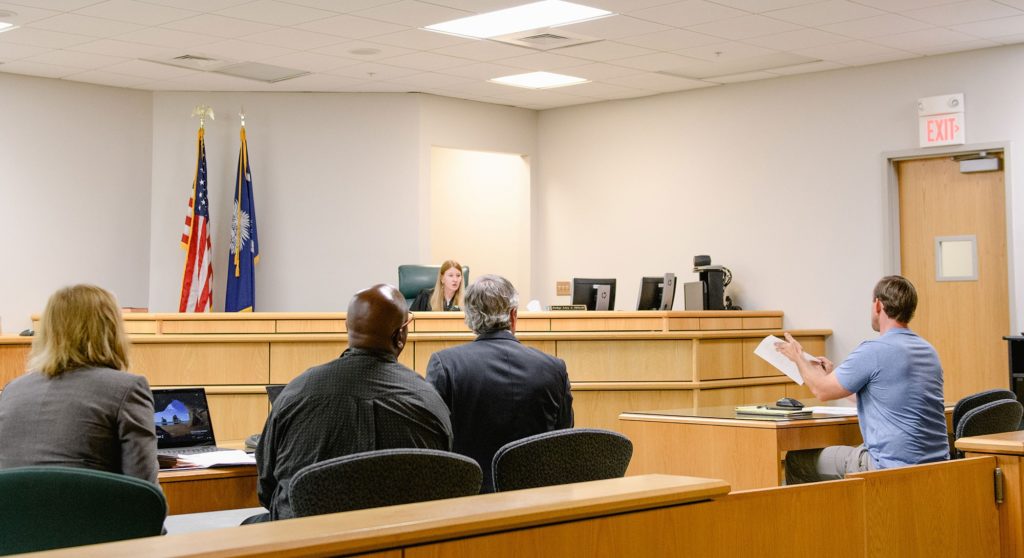
Once an eviction is filed, tenants must navigate a challenging and often complex legal process to maintain their housing. In eviction court, tenants are substantially less likely than landlords to have legal representation to help them navigate the court system. If the court issues a judgment for eviction, tenants usually have only days before a sheriff can physically remove them from their home and change the locks. They then have to find a new place to live with an eviction on their record, making finding safe and affordable housing even more challenging. The housing instability caused by an eviction can exacerbate people’s financial distress, adversely affect their health and work performance, and increase poverty. Communities with higher rates of eviction filings also exhibit higher rates of homelessness.
Evictions have a disproportionate impact on low-income families and members of marginalized communities. Low-income women, especially women of color, are the most at risk for eviction. Domestic violence victims and families with children are also particularly vulnerable. In some cities, public housing agencies (PHAs), which own and operate public housing developments, are responsible for many eviction filings, and PHAs with higher shares of Black tenants often have higher filing rates.
The COVID-19 pandemic underscored the importance of eviction prevention policies and programming. During the pandemic, federal, state, and local governments responded to widespread financial hardship by implementing policies that prohibited evictions during the public health emergency and provided short-term emergency rental assistance to millions of Americans. These emergency efforts temporarily curbed eviction rates in many localities. But after these supports ended, total eviction filings are returning to pre-pandemic levels.
This case study series can help localities learn and implement effective strategies to help renters avoid eviction. The three case studies are:
Grand Rapids, MI’s Eviction Prevention Program: From 2018 to 2020, Grand Rapids piloted an eviction prevention program that paired rental assistance with legal services for tenants facing eviction. The city partnered with the Michigan Department of Health and Human Services, the Salvation Army, and the 61st District Court to implement the program. The pilot was phased out in 2020 when statewide COVID-19 eviction prevention programs and policies replaced it.
Boulder, CO’s Eviction Prevention and Rental Assistance Services program: In 2020, the City of Boulder passed a No Eviction Without Representation measure, which established the Eviction Prevention and Rental Assistance Services (EPRAS) program. EPRAS provides renters, before or after receiving an eviction notice, with an “eviction prevention coordinator” to help them navigate the process and access the program’s short-term rental assistance and free legal and landlord-tenant mediation services. Coordinators can also connect tenants to other resources available locally. The city’s excise tax on rental properties funds these services.
Syracuse, NY’s rental eviction prevention programs: In 2018, the City of Syracuse partnered with the Syracuse Housing Authority, a private property management company, local charities, and legal aid agencies to pilot the Eviction Prevention Case Management Program for public and subsidized housing tenants. The pilot program was designed to intervene early to help low-income renters avoid eviction filings. The program provided case managers who proactively contacted tenants when they missed their rent payments and worked with them to find appropriate resources, such as help completing rental assistance applications, financial counseling, and guidance on setting up a repayment plan.
Grand Rapids, MI’s Eviction Prevention Program
Overview
Spurred by rising rents and an increasing rate of evictions, the City of Grand Rapids launched a pilot program, the Eviction Prevention Program (EPP), which operated from 2018 through 2020. The city developed the program with the Kent County office of the Michigan Department of Health and Human Services (MDHHS), the Salvation Army, and the 61st District Court. The following sections provide key takeaways and review Grand Rapids’ local housing context, eviction prevention pilot program components, program outcomes, new program and policy developments, and policy implications.
Key takeaways
Establishing relationships with property owners and judges facilitates more effective and efficient eviction prevention programming. Staff at MDHHS, the Salvation Army, and the 61st District Court contacted existing property owners and judges involved in eviction orders to provide information about the EPP and how it would benefit property owners and tenants. They also shared how the program would help the legal system by reducing the eviction case backlog. Outreach was crucial for generating buy-in and cooperation.
Local policymakers can expand their program’s reach by leveraging existing resources. In addition to seeking out new funding for the EPP, Grand Rapids policymakers leveraged underutilized resources at the state and local levels to bolster the amount of funding that the program could offer.
Eviction prevention programming should address the root cause of repeat eviction proceedings and provide financial assistance to avert a current eviction. In establishing a more recent Eviction Diversion Initiative (EDI) in Grand Rapids, policymakers and staff incorporated linkages to supportive services in addition to providing rental assistance for tenants. This programmatic development built on the experiences of Grand Rapids’ first EPP, which provided financial assistance and legal aid to tenants and landlords but still saw tenants return for eviction proceedings several times.
Description
Like many other cities, Grand Rapids faced an affordable housing crisis before the COVID-19 pandemic. In 2018, 44 percent of renters in the Grand Rapids-Wyoming metro area were cost-burdened (i.e., spent more than 30 percent of their income on rent), and 20 percent were severely burdened. Moreover, there were clear racial inequities in the city’s patterns of housing instability. In 2019, nearly one out of six Black children in the county accessed the homeless system, compared to one in 130 white children. The disproportionate rate of homelessness among Black families has been attributed to rising housing costs and a history of racially exclusive housing policies. The COVID-19 pandemic further drove up housing costs, and the area’s housing gap grew 59 percent.
In response to concerns about affordable housing and economic mobility, Grand Rapids commissioners established the “Great Housing Strategies” workgroup in 2015. The workgroup included developers, community advocates, nonprofits, government agencies, and others to address issues faced by low-income and vulnerable populations, including the lack of resources for those facing eviction. They recommended a court-based eviction prevention program based on a similar program in Kalamazoo. Thus, the pilot Eviction Prevention Program (EPP) was created in 2018.
The City of Grand Rapids developed the EPP in partnership with the Kent County office of the Michigan Department of Health and Human Services (MHDDS), the Salvation Army, and the 61st District Court. The EPP provided one-time rental assistance to eligible tenants facing eviction because of rent arrears. Tenants could also access legal services, such as advice about their rights and representation in court, offered through Legal Aid of West Michigan. The EPP targeted tenants who had received an eviction notice and a summons to appear in court on a specific date. To be eligible, tenants needed to have a source of income, live in a unit where their rent did not exceed 75 percent of their income, wish to remain in the unit, have a landlord who also wanted them to stay in the unit, and have sufficient funds to pay the next month’s rent.
Funding for the pilot program came from the Steelcase Foundation, the Grand Rapids Community Foundation, the City of Grand Rapids, and the MDHHS. Together, the Steelcase Foundation and the Grand Rapids Foundation contributed funds for a caseworker at the Salvation Army and half the cost of an eligibility specialist with the Kent County MDHHS office. MDHHS funded the remaining cost of the eligibility specialist. The program also aimed to leverage existing, underutilized funding streams, especially State Emergency Relief (SER) funds. The SER program was established to provide immediate assistance to low-income individuals and families facing unexpected financial hardship, but many tenants were unaware of it or could not access it quickly.
To reach tenants at risk of eviction, the program employed various approaches, including distributing multilingual flyers through the 61st District Court and stationing staff members at the courthouse for enrollment. Engaging property owners was also a crucial aspect of the program, as they were essential partners. Education about the EPP was provided to property owners, fostering positive relationships with those unsure about the program.
Once tenants expressed interest, Salvation Army case managers assisted them with the application process, while MDHHS eviction prevention specialists screened for eligibility and expedited SER applications. After approval, tenants and property owners entered into a stipulation agreement, with property owners agreeing to allow the tenant to remain in the unit and dismissing the eviction claim.
Case managers guided tenants and property owners throughout this process, including ensuring that they signed the stipulation agreement along with the presiding judge and that the eviction judgment was not entered into a court record. If the SER funding did not cover the entire amount of unpaid rent, the case manager or eviction prevention specialist would work with the tenant to submit an application for other funding sources (such as funds from local churches or nonprofits, ESG funds, or county discretionary funds). The case manager then disbursed the funds to the landlord and tenant and provided additional counseling as necessary.
In 2020, the EPP was phased out and replaced by the statewide Eviction Diversion Program (EDP), a temporary emergency program supported with COVID relief funds.
Process and timeline
2015: Grand Rapids commissioners convened a workgroup to discuss the future of housing and potential policy directions for the city. The workgroup identified a lack of eviction resources as a major challenge facing renters and recommended that the city implement a court-based eviction prevention program.
2018: The EPP launched on January 1, 2018, as a three-year pilot program through the partnership among the City of Grand Rapids, the Kent County MDHHS Office, the Salvation Army (TSA), and the 61st District Court.
2019: The City of Grand Rapids allocated Emergency Solutions Grants (ESG) funds to support increased TSA staffing and case management. TSA and MDHHS improved efficiency by developing a joint intake process for meeting clients.
2020: From March to July 2020, the State of Michigan imposed a moratorium on evictions. It also established the Eviction Diversion Program (EDP), supported with Coronavirus Aid, Relief, and Economic Security Act (CARES) funds. This new statewide program largely replaced Grand Rapids’ EPP. The EPP began to ramp down and officially ended on December 31, 2020.
2021: The Michigan Supreme Court issued an Administrator Order (AO) on July 2, 2021, with new rules that direct tenants and landlords towards available services, such as rental assistance or mediation. Key changes include holding a pre-trial meeting where tenants and landlords can learn about rental assistance and other services and pausing proceedings if the tenant applies for rental assistance. These changes are intended to help parties resolve their disputes outside the courts.
2022: In June 2022, the Grand Rapids’ 61st District Court received an award from the National Center for State Courts (NCSC) and the Wells Fargo Foundation to fund a new Eviction Diversion Initiative. The Eviction Diversion Initiative replaced the EDP, which had ended with the expiration of CARES Act funds. The new EDI program links tenants to additional resources to help promote their economic and housing stability, including job search support and connections to ongoing rental assistance programs. Grant funding for the Eviction Diversion Initiative is slated to end in 2024, but staff at the 61st District Court are looking for opportunities to incorporate the programming into standard court procedures for evictions after the grant ends.
Outcomes
From January 2018 to December 2020, 9,679 eviction cases were filed in Grand Rapids’ 61st District Court. In 2019, 82 percent of EPP cases avoided eviction judgment compared to 34 percent of non-EPP cases. In 2020, roughly 80 percent of EPP cases avoided an eviction judgment, compared to less than half of non-EPP cases. The EPP enabled 324 households to avoid eviction. These households included 981 people, 525 of whom were children.
The EPP screened 983 households during its duration, representing 10.2 percent of all eviction filings. A third of all applicants were deemed eligible for assistance. The inability to secure a stipulation was the top reason a case was deemed ineligible. Most households served by EPP were families with minor children and headed by women. Forty-three percent of households were single parents with children, and 22 percent were two or more adults with children. More than two-thirds of EPP participants were Black.
Local policymakers and the 61st District Court built on the success of the original EPP to develop the Eviction Diversion Initiative (EDI) that launched in 2022. Drawing on lessons learned from the original EPP, policymakers incorporated additional resources into the EDI to address the root cause of evictions rather than focusing solely on immediate rental assistance to stop court proceedings.
Policy significance
Evictions have both short- and long-term consequences for families, including the loss of possessions, mental health concerns, and disruptions to work and school. By helping more than 300 families avoid eviction, the EPP program contributed to their overall economic stability and well-being.
The EPP was an important resource for renters facing eviction in Grand Rapids: in 2020, nearly 80 percent of cases that received EPP funding did not receive an eviction judgment, compared to approximately 49 percent of non-EPP cases. The large share of Black American households served is important, as evictions disproportionally affect people of color.
However, one challenge that may have prevented the EPP program from serving more participants in its early stages was the number of eligibility requirements that households had to meet to receive assistance. Over the course of the pilot program, only 33 percent of all applicants were eligible for assistance. Meeting these requirements in a timely manner required a significant amount of work upfront for the tenant and landlord. As the program progressed, however, case workers and applicants were able to move through the process more fluidly, especially when securing stipulation orders. After the pilot program, evaluators highlighted the need for flexibility in program approaches to adapt or reduce eligibility requirements.
Outreach efforts led to landlords becoming more willing to agree to a stipulated order for the conditional dismissal of eviction cases in the second and third years of the program, a crucial step in fulfilling the process. While these stipulations were optional in the program’s first year, caseworkers realized their importance for program success and made them a requirement in years two and three.
The overall success of Grand Rapids’ EPP demonstrates the power of interagency and other community collaboration for eviction prevention programming. Collaboration enabled the program to build critical partnerships with property owners and streamline processes for assessing tenants’ eligibility. Furthermore, the program minimized financial strain by leveraging underutilized funds, along with additional community funding. Although the EPP was in place for only two years, the program served as an impetus for programs that followed.
Additional information
Eviction Prevention: A Guide for Local Governments. This guide from the National League of Cities and the Stanford Legal Design Lab offers a range of tools and best practices to local policymakers interested in implementing eviction prevention programs.
Grand Rapids Eviction Prevention Pilot Program Final Evaluation Report: 2018-2020. This final evaluation report from Metrica described the design and implementation of Grand Rapids’ Eviction Prevention Program (EPP) pilot and its outcomes.
The Eviction Prevention Cohort: Highlights from the Five-City Pilot. Grand Rapids’ EPP was one of five city pilot programs in the National League of Cities and Stanford Legal Design Lab’s Eviction Prevention Cohort. This report provides an overview of the programs in each city.
Boulder, CO’s Eviction Prevention and Rental Assistance Services program
Overview
Before the COVID-19 pandemic, Boulder County, CO, saw 1,000 eviction filings per year, and only two percent of tenants had legal counsel in eviction court, compared with 88 percent of landlords. To address this disparity, the City of Boulder passed a No Eviction Without Representation measure in November 2020, which allowed the city to charge an excise tax to provide funding for launching its Eviction Prevention and Rental Assistance Services (EPRAS) program in January 2021. Through EPRAS, an “eviction prevention coordinator” helps participating renters navigate the eviction process and access locally available one-time payment rental assistance and free legal and landlord-tenant mediation services. EPRAS is available to any City of Boulder household facing eviction, regardless of income. This case study focuses on how the EPRAS program is implemented and its effects on eviction prevention in Boulder.
Key takeaways
An eviction prevention program can encourage tenants to attend court proceedings during the eviction process. In most cases, if tenants attend court, an eviction is prevented from going on their record. Before EPRAS launched in January 2021, 50 percent of cases resulted in a default judgment of eviction because the tenant did not attend court. By 2022, this portion dropped to around 30 percent.
Rental assistance is a promising program component because many eviction court filings are related to unpaid rent. Approximately 90 percent of renters in Boulder County’s eviction court are there because they cannot pay rent, and EPRAS can provide tenants with up to $4,000 in one-time rental assistance. EPRAS could potentially be strengthened by having someone physically present in eviction court to write tenants’ rental assistance checks in real-time.
Free legal services for tenants can help level the playing field between renters and landlords. In Boulder and nationwide, landlords are more likely to have legal representation in eviction court than tenants. EPRAS is an example of how localities can help bridge that gap by hiring mission-driven organizations to provide lawyers for tenants facing eviction.
Local governments can support critical eviction prevention programming with a dedicated revenue source and by partnering with local nonprofits. Boulder’s excise tax provides a reliable source of funds for EPRAS. The city collaborates with the Emergency Family Assistance Association (EFAA) to increase tenants’ access to various available resources, including one-time payment rental assistance. It also offers free legal expertise to tenants by contracting with the local nonprofit Bridge to Justice.
Collecting program data, publicly tracking progress, and conducting annual reporting can increase transparency and accountability. EPRAS’s progress is regularly tracked online and in annual reports. Careful monitoring helps the city to be transparent about whether EPRAS is operating as designed and helps hold program partners accountable for successful implementation.
Description
In November 2020, voters in the City of Boulder passed the No Eviction Without Representation measure. This measure allowed the city to charge an excise tax on rental properties to provide tenants facing eviction with rental assistance, legal representation, and resource coordination. The measure was supported by a citizen petition with more than 3,500 signatures. The city’s excise tax requires landlords to pay $75 annually for each residential unit they rent. This is a dedicated revenue source for the program and was expected to generate $1.9 million in 2021. In March 2022, city records showed Boulder had issued rental licenses for more than 10,000 properties. To support the program before excise tax revenue was available, the city allocated $1.03 million in general funds to cover the EPRAS program’s startup costs.
EPRAS is housed within the city’s Community Mediation and Resolution Center, which offers other tenant services (a conflict resolution mediation program; a landlord, tenant, and roommate resources webpage; and a 2023 Landlord-Tenant Handbook on each party’s rights and responsibilities). EPRAS provides Boulder residents facing eviction with an eviction prevention coordinator who helps them navigate the process, answers their questions, explains their rights, and connects them with available resources. Additionally, EPRAS can offer households up to $4,000 in direct rental assistance and free legal and landlord-tenant mediation services.
To raise awareness about EPRAS, the city requires information about these services to be attached to all ten-day demand notices, which landlords must issue to tenants before filing an eviction in order to give them time to come to an agreement or to move out. EPRAS information is also attached to all eviction court summons. EPRAS attempts to contact everyone on the eviction docket to discuss their options and prevent eviction.
Tenants facing eviction can also contact EPRAS directly by calling, using an online tool available in English and Spanish, or visiting the city’s Customer Service Hub in person. Tenants may connect with EPRAS before or after receiving an eviction notice.
In 2022, 90 percent of all eviction court cases in Boulder County involved unpaid rent. A Colorado law passed in 2021 requires landlords to drop eviction cases after tenants pay past rent. The law does not require landlords to work with tenants; however, any delays in rental assistance can mean that tenants are evicted despite participating in the program. As a result, EPRAS could benefit from having someone physically present at tenants’ eviction court dates to write rental assistance checks in real time. In addition to applying for rental assistance as soon as possible, tenants must attend court. Around one-third of tenants do not show up and receive a default judgment of eviction.
For the program’s first six months, EPRAS relied on existing local partners, Boulder County Housing Helpline and EFAA, to provide tenants with rental assistance funding. However, recognizing a growing need, the city expanded EPRAS to provide additional rental assistance through a streamlined application process.
EPRAS partners with the EFAA, a locally known family resource center that also offers rental assistance, to disburse some of EPRAS’s funds. EFAA also helps generate awareness about EPRAS among its clients and connects EPRAS’s tenants with other supportive services besides eviction prevention. In 2022, EPRAS provided $394,720 to EFAA for tenants’ rental assistance and allowed tenants to access funds through either agency but not both.
The city contracts with the local nonprofit Bridge to Justice to offer EPRAS’s free legal and mediation services. Bridge to Justice provides six attorneys to help tenants navigate the eviction process and reach an agreement with their landlords to prevent an eviction, such as through a repayment plan for arrears, a strategy to address a lease violation, or developing a move-out timeline that works for both parties.
EPRAS is also supported by a Tenant Advisory Committee of five local renters, who provide feedback on rental policies to the Boulder City Council and help with EPRAS outreach to make more people aware of these services. Members are selected through an application process and receive an annual stipend of $1,000 for their work.
Additionally, the city worked with the Housing Solutions Lab in 2021 to develop EPRAS’s data collection practices that help the city assess whether the program operates equitably and as intended. The city tracks program data and publishes it in annual reports and via an online dashboard. The dashboard includes information on total evictions over time, eviction prevention inquiries, EPRAS clients served, client demographic data, and eviction court case information and outcomes.
Timeline
2020: The city’s No Eviction Without Representation measure passed with 59 percent of the vote, allowing the city to charge landlords a fee that would provide a dedicated revenue source to fund eviction prevention services.
2021: The city launched EPRAS in January. Through the fall and winter, Boulder worked with the Housing Solutions Lab to refine the program’s data collection, management, and reporting, which included engaging the Tenant Advisory Committee for feedback.
2022: The city streamlined the EPRAS client intake form, implemented a follow-up survey with clients three to six months after they have interacted with the program, tracked data to understand program impacts, and shared progress publicly online.
Outcomes
EPRAS is still a fairly new program but offers promising practices for other localities to consider and adapt to their local context. In the program’s first year, the city’s 2021 Eviction Prevention and Rental Assistance Services Annual Report reported EPRAS had:
- Contacted 390 tenants to access services before eviction court
- Connected 82 households with $168,536 in rental assistance (an average of $2,022 per household)
- Referred 204 clients to receive legal services
- Referred 51 cases to mediation
In 2021, evictions were prevented in 63 percent of eviction court cases, a 26 percent increase in eviction prevention since before EPRAS.
The program continued to help more tenants in its second year. In 2022, Boulder County’s eviction court filings returned to their pre-pandemic levels (1,315 total filings). EPRAS expanded its staff and reported serving 534 clients, a 77 percent increase since 2021. In court, evictions were prevented in 70 percent of cases in 2022. The remaining 30 percent resulted in a default eviction judgment (before EPRAS, 50 percent of cases ended this way). EPRAS also connected tenants with $728,200 in rental assistance, including $456,237 from EPRAS and additional funds from EFAA, and provided 124 tenants with free legal services.
As of late June 2023, the EPRAS dashboard says the program has received 1,439 eviction prevention inquiries and served 1,083 unique clients since its inception.
Policy significance
In 2022, state legislation was passed to support eviction prevention programs like the one in Boulder. The State of Colorado created two new grant programs directing $138 million to local governments and nonprofits providing flexible rental assistance and legal services. In view of rising eviction rates, tenant protections continued to be a focus for state legislators in 2023; for example, if HB23-1120 passes, it will require landlords to participate in mandatory mediation with tenants receiving public cash assistance before an eviction can be filed.
While the state’s actions cannot be directly linked to Boulder’s EPRAS program successes, they demonstrate that Colorado has identified a need for eviction prevention programs like EPRAS and policies that support them. The City of Boulder’s program and Colorado’s state policies are strategies other localities can implement to prevent evictions and further housing stability. Many localities nationwide have already passed laws requiring tenants who receive an eviction notice to have access to free legal services or representation. In addition, three states (Washington, Connecticut, and Maryland) have enacted statewide right-to-counsel legislation.
Additional information
2021 Eviction Prevention and Rental Assistance Services Annual Report. The city’s first annual report documenting impacts from the EPRAS’s first year.
2022 Eviction Prevention and Rental Assistance Services Annual Report. The city’s second annual report documenting EPRAS’s updates and impacts.
From the Field: Boulder Establishes Eviction Prevention Program through Ballot Initiative. A National Local Income Housing Coalition memo that discusses EPRAS’s early outcomes.
Strengthening Data Collection in Boulder, CO. A Housing Solutions Lab brief on Boulder’s EPRAS program and its data collection, management, and reporting systems.
Eviction Prevention Programs. A Local Housing Solutions brief localities can read for more information on eviction prevention programs. groundbreaking and 2022 updates.
Rental eviction prevention programs in Syracuse, NY
Overview
The City of Syracuse created two pilots under the Eviction Prevention Case Management Program in 2018, one with the Syracuse Housing Authority and another with a private property management company for a Section 8 property as part of its eviction prevention strategy. Syracuse’s Eviction Prevention Case Management Program intervenes early in the eviction process to avoid judicial proceedings. Case managers proactively contact tenants when they miss their rent payments and work with them to find appropriate assistance. They then offer a range of services to help tenants catch up on their rent, including referrals to financial counseling, processing applications for financial assistance to pay rental arrears, setting up repayment plans, or recalculating rent owed to the property owner based on changes in tenant income. The pilots successfully reduced eviction filings, increased rent collections in the targeted properties, and offered insights to localities interested in case management programs for eviction prevention.
Key takeaways
Early intervention programs can help identify tenants who might be at risk of eviction and can work with them to identify options to avoid an eviction filing. Early intervention also can help property managers and owners develop better relations with their tenants.
Property owners, both public and private, can save costs by investing in a case management approach. Property owners typically incur considerable costs in initiating eviction proceedings and toward eviction court fees. Early intervention programs can help avoid such costs and also improve rent collections.
Targeting early eviction prevention efforts to income-restricted housing can improve vulnerable individuals’ housing stability and overall living conditions. Public and subsidized housing properties serve very low-income and otherwise vulnerable individuals who often find it difficult to access market housing. Targeting eviction diversion programs to these properties can contribute to their fiscal health and maintenance by making rental income more reliable and reducing turnover and legal costs.
Partnerships with local charities and legal aid agencies can be valuable in initiating eviction diversion programs. Such partnerships can help reduce upfront program administrative costs for the locality. They can also meet diverse tenant needs and provide multiple touchpoints to help renters avoid the threat of eviction.
Description
A 2018 analysis of barriers to opportunities in Syracuse found that 25 percent of Syracuse residents move at least once a year. More than half of Syracuse’s renters are rent burdened and spend more than 30 percent of their monthly income on rent and utilities. About 27 percent of the renter households were severely cost-burdened, spending more than 50 percent of their income on rent. In February 2018, the City of Syracuse identified preventing evictions as one of three main areas requiring action to improve housing stability.
Following this commitment, the city’s Department of Neighborhood and Business Development piloted eviction prevention programs at two types of properties with federal housing assistance. Such properties usually serve very low- and low-income households and enable them to pay no more than 30 percent of their income towards rent.
The first pilot was a collaboration between the Syracuse Housing Authority (SHA) and the Volunteer Lawyers Project. As a public housing authority (PHA), SHA owns and operates 15 housing developments with more than 2,500 units. It is one of the largest rental property owners in the city and was responsible for 20 percent of the eviction cases in the city. According to some accounts, SHA had a history of “using the eviction court as a [rent] collection agency.” Nationally, PHAs account for a higher share of eviction filings than the private market. On average, PHAs file for eviction against 7.6 percent of their tenants. In some cases, the figures are as high as 20 percent.
The city initiated an eviction diversion program with the SHA to address the high rate of eviction filings and rent delinquency in public housing properties. During the pilot program, SHA’s property managers closely monitored rent receipts and alerted the PHA’s resident support services staff when a tenant missed payment. SHA hired two dedicated case managers using a combination of PHA funds and funds from the Emergency Solutions Grant (ESG), a HUD program that helps cities address the challenges faced by people experiencing or at risk of homelessness.
When they were alerted to a missed payment, the case managers gathered additional details about the tenant and rent owed from the collection staff and property managers. They established direct contact with the tenant by phone, letter, or in-person visits as early as five days after a missed payment. The case managers then worked with the tenant to understand why they missed the payment and what support they might need to get caught up on their rent. Case managers could help the tenant apply to the PHA to have the amount of rent they owed recalculated if they had experienced a recent drop in income. The case managers could also use ESG funds to offer one-time financial assistance or help negotiate a rent repayment plan. If the tenant needed legal assistance, the case manager connected the tenant with the Volunteer Lawyers Project.
The city implemented a second pilot program at Clinton Plaza, a 305-unit Section 8 apartment building, using funding from the Community Development Block Grant (CDBG) Program in May 2018. CRM Rental Management had recently taken over Clinton Plaza’s management and found that several tenants were late on their rent or had not paid rent for months. Instead of evicting them, CRM Rental Management approached the city for assistance, and both parties agreed to pilot a case management approach in collaboration with the Catholic Charities of Onondaga County.
Similar to the housing authority pilot, residents falling behind on rental payments in Clinton Plaza were referred to a dedicated case manager who, in this case, was based at Catholic Charities. Depending on the tenants’ needs, the case managers connected them with support services, such as cleaning agencies that could help them maintain the property, or helped them set up a payment plan. Catholic Charities worked with the Legal Services of Central New York to provide free legal representation to any tenants who ultimately faced eviction orders. CRM found the one-year pilot very successful and has continued operating the model using its own funds.
In addition to case management assistance for eviction prevention, the City of Syracuse is experimenting with other tools to improve housing stability by supporting tenant advocacy unions and setting up a local rental registry. A city ordinance passed in September 2020 bans rental property owners who have not enrolled their properties in the city’s rental registry from issuing eviction orders to their tenants.
Process and timeline
2017: A fact sheet released by the City of Syracuse reports high numbers of eviction cases and family moves. In response, the city administration seeks ways to improve housing stability.
2018 February: The city announces its plan to improve housing stability with 11 priority actions, including an eviction prevention program. The priorities emerged from an intensive public engagement process.
2018 April: The city dedicates $167,500 from its Emergency Solution Grants allocation and receives a matching amount from the Syracuse Housing Authority to pilot the Eviction Prevention Case Management Program. Two case managers hired by the Housing Authority start working with public housing tenants to offer appropriate support and provide referrals as soon as they miss a payment.
2018: The new manager of Clinton Plaza, CRM Rental Management, approaches the city for help with the high incidence of missed and delayed rental payments from tenants and alternatives to evicting them. The city dedicates $80,000 from its CDBG funds to establish a case management pilot program at Clinton Plaza. Catholic Charities of Onondaga offers the case management services.
2020: The city passes a new ordinance prohibiting the eviction of tenants in one- and two-family non-owner-occupied rental properties not enrolled in the city rental registry.
Outcomes
The City of Syracuse reports that the two pilot programs introduced in 2018 were very effective in preventing evictions. According to the Volunteer Lawyers Project data, the number of eviction petitions filed by the Syracuse Housing Authority dropped substantially after the Eviction Prevention Case Management pilot was introduced in 2018. In 2016 and 2017, SHA filed 960 and 834 eviction petitions, respectively. SHA filed only 203 petitions in 2018, the year the program started, a 75 percent drop since the previous year. The Housing Authority reported a total savings of $116,000 due to improved rent collections and reduced legal costs. While the most visible outcome was the reduction in the number of petitions, the number of actual evictions also fell by half, from 60 in 2017 to 27 in 2018.
Before the pilot, SHA used eviction petitions as a way to ensure timely rental payments from its tenants. The threat of evictions stressed tenants and also strained their relationship with the housing authority. The Eviction Prevention Case Management pilot helped change SHA’s approach to rent collection. The program has encouraged direct dialogue between the PHA’s property managers and its tenants to deal with grievances without involving the court.
Eviction Innovation Lab’s case study on the Eviction Prevention Case Management pilot in Clinton Plaza reported similar successes. Catholic Charities’ dedicated case manager built a relationship of trust with Clinton Plaza’s tenants. In twelve months, 83 tenants received case management assistance and 69 households avoided eviction. In the pilot’s first year, Clinton Plaza saved an estimated $283,448 in eviction filings and lost rent. Based on those savings, Clinton Plaza’s management decided to continue implementing the case management program with its own funds.
Buoyed by the success of the two pilot programs, the city launched another eviction prevention program at three properties owned by a private firm, Conifer Realty, on April 1, 2020. However, the program did not have the same successful implementation as the two pilot programs. Only 13 households received help under the program in its first year of implementation. According to city officials, COVID-19 restrictions prevented the case managers from conducting in-person visits. There was also minimal interest in participation in the program from the tenants who missed their rental payments since they were protected against evictions by New York State’s eviction moratorium, which was in effect at this time.
Policy significance
Localities can benefit from adopting eviction diversion programs that intervene before an eviction filing. These upstream programs can prevent undue harm to tenants’ mental health; avoid adding an eviction filing to tenants’ records, which can be a barrier to accessing housing in the future; and build trust between tenants and property owners.
Preventing eviction petitions and court cases can benefit tenants and property owners financially. The Syracuse Housing Authority saved more than $100,000 through the eviction prevention pilot program. CRM property managers saved nearly $300,000 by improving rent collections and avoiding legal and administrative expenses associated with eviction filings and court proceedings.
Localities interested in adopting similar programs can benefit from funding small-scale pilot programs. Establishing pilots can illustrate the financial benefits of eviction diversion to property owners of dedicated subsidized housing and encourage them to adopt similar programs independently.
Additional information
City of Syracuse: Housing Stability Initiatives. Eleven priority areas identified by the city to improve housing stability.
Eviction Innovation: Eviction Prevention in Syracuse, NY. Case study on Syracuse’s eviction prevention pilots from Stanford University’s Legal Design Lab.
Next City Article: Whatever Happened to Syracuse’s Eviction Prevention Program. Article on a third initiative launched by the City of Syracuse pursuant to the success of its earlier pilots.
Summary of Eviction Prevention Pilot Programs. Summary of the eviction prevention pilot programs and their impact released by the Mayor’s Office, City of Syracuse in October, 2019.
Syracuse: By the Numbers. A factsheet with eviction data in Syracuse collected by the Volunteer Lawyers Project of Onondaga County from October 17, 2012, to January 16, 2017.
The Newshouse: Syracuse Eviction Prevention Program Saves Tenants from Homelessness. Article on how the case management approach helps reduce evictions in Syracuse.
More Publications
Learn more about what The Lab has to offer.