Case Studies
Aging in place strategies from Boston, MA; Burlington, VT; and Guilford County, NC

Overview
The share of the country’s population that is 65 and older has grown significantly in recent decades. People are living longer, birth rates are lower, and baby boomers (an estimated 73 million people born between 1946 and 1964) are aging. By 2030, all baby boomers will be at least 65 years of age, increasing the need for more housing programs and services targeted to older adults. This series of case studies explores policy options to support older adults’ ability to age in place through smaller housing units, age-friendly housing features, and amenities.
Local regulations make building age-friendly housing difficult. According to the American Association of Retired Persons (AARP), having a diverse mix of housing types is an essential component of age-friendly communities. However, many localities lack housing options because of restrictive zoning policies that make it difficult or costly to build small units.
Older adults, especially those living in affordable housing, have medical needs requiring in-home healthcare coordination, education, and support after in-patient stays. Seniors living independently have needs that emerge over time which may require additional help but do not necessitate a move to assisted living. Low-income adults living in affordable housing developments have been shown to have greater healthcare needs than seniors with higher incomes.
Many seniors live in homes that do not have the necessary features to safely age in place. AARP reports that nearly 90 percent of older adults want to live in their homes for as long as possible. However, many seniors live in older homes that need substantial repairs to make them safe and lack accessibility and safety features.
This case study series can help localities better understand the housing challenges of older adults and ways to address them. The three case studies cover:
Boston, MA’s Compact Living Policy: Many older adults are interested in downsizing from their larger single-family home to a more compact, affordable, and accessible unit in their existing neighborhood. However, many localities lack small-scale housing options for older adults who wish to downsize and live independently. This case study discusses Boston’s Compact Living Policy, which encourages more age-friendly neighborhoods by allowing developers to build smaller-than-typical housing units with communal spaces that make up for the smaller unit size. The housing is near transit and has fewer requirements for parking. This case study can help localities understand the demand for compact housing among seniors and provide a clearer picture of the design features and amenities suitable for older adults and other households that want small, affordable units.
Burlington, VT’s Support and Services at Home (SASH) Program: Most older adults want to remain in their homes as they age but may have difficulty because of chronic illnesses and disabilities and require additional support to age in place. Seniors living in affordable housing have particularly high healthcare needs, and affordable housing providers are often ill-equipped to help their residents maintain good health and access to health services. This case study discusses a Burlington, VT, program that demonstrates how healthcare and housing providers can partner to improve affordable housing residents’ well-being, enable them to remain in their homes, and possibly reduce costs for both housing providers and the healthcare system as a whole.
Aging Gracefully Program in Guilford County, NC: Many seniors live in housing that is unsuitable for them as they age because the homes need repairs or accessibility and safety features. This case study discusses the nonprofit Aging Gracefully Program in Guilford County, NC, which sends a team of occupational therapists and nurses to seniors’ homes to assess their needs and determine home modifications that can help them safely age in place. The case study provides localities with details on designing a program to help older adults stay in their homes and neighborhoods longer, strengthen their housing stability, prevent unwanted moves, and further equity for older adults, including those with disabilities.
Compact Living Policy, Boston, MA
Overview
Many older adults with single-family homes are interested in downsizing as they age, preferring a more compact and accessible unit within the same neighborhood or locality. A smaller-sized home can offer many benefits for adults who wish to age in place. Homes with a smaller footprint are generally more affordable because of the reduced costs of maintenance and repairs, utilities, and property taxes. These homes can also be more manageable for persons with mobility issues, as they generally have fewer stairs and require less physically demanding upkeep, such as cleaning large areas and yard work.
Despite these benefits, many localities lack small-scale housing options for older adults who wish to live independently. Without those options, seniors may need to choose between remaining in their single-family home and moving into dedicated senior housing, which may not be available in their neighborhood or offer services above and beyond their needs or budget.
The City of Boston’s Compact Living Policy allows developers to construct smaller-than-typical units if they meet requirements related to communal space and access to transportation options. While the pilot does not exclusively support older adults, the principles of the policy align closely with those of age-friendly communities: smaller homes that are more affordable, accessible, and located close to services and transit.
This case study describes how the Compact Living Policy is attempting to meet the housing needs of Boston’s older adults and the process for developing and implementing the program.
Key takeaways
Local regulations can make building age-friendly housing a challenge. In many localities, zoning and building codes facilitate the development of single-family homes rather than smaller units in multifamily buildings or clusters. In Boston, the Compact Living Policy allows developers to deviate from the city’s standard regulations. For example, units can have less square footage and fewer parking spaces than is typically required as long as the property offers ample common space and access to transit or other transportation services.
Small-scale housing is not just for older adults. The design principles that underscore the Compact Living Policy, such as more efficient use of space and easy access to transit, can be valuable for people of all ages and abilities. Compact units can provide an affordable and accessible housing option for young professionals, students, or individuals with disabilities.
Small-scale housing can be flexible and responsive to older adults’ needs. Some older adults may be hesitant to downsize out of concern that they won’t have enough space to host family and friends, continue their hobbies, or store their belongings. In a well-designed compact development, many of these functions move from the individual unit into common spaces such as shared storage, shared office space, green space, and gathering spaces for larger groups.
Description
In 2017, more than 80 percent of adults aged 65 and older lived in a household alone or with a spouse. Most homes, however, are designed with larger families in mind. In Boston, two-thirds of households are single adults or couples, but only one-third of housing units are studios or one-bedroom units.
According to AARP, having a diverse mix of housing types is an essential component of age-friendly communities. In Boston and other cities, the mismatch between the city’s changing demographics and the existing housing inventory means that many older adults have few options for downsizing while remaining in their neighborhood.
To address this gap, Boston launched the Compact Living Policy. Its goal is to encourage the development of space-efficient, cost-effective housing options that meet the needs of the growing population of small households.
Under the Compact Living Policy, which is available for developments throughout the City of Boston, developers building at least ten new residential units (whether for rent or for sale) may propose unit designs that are smaller than the minimum sizes required by Boston’s standard building codes. Under the Compact Living Policy, a one-bedroom unit may be smaller than 600 square feet, while a one-bedroom unit must be at least 625 square feet under the standard building code. Compact developments are also limited in the number of parking spaces they may offer, and many developments do not offer parking at all. Unit size and parking are important drivers of development costs, which makes these policies attractive to developers. In exchange for this flexibility, units developed under the Compact Living Policy must follow a set of design guidelines that emphasize the importance of common space and shared amenities. Developments are still subject to the standard zoning and regulatory review process.
The pilot of the Compact Living Policy is an opportunity to test the market demand for smaller homes and how developers respond to more flexible building regulations. Before launching the pilot, the City of Boston constructed a model home, the Urban Housing Unit, to solicit early feedback from residents. This effort showed that many residents across the city were open living in a compact unit if it was thoughtfully designed and relatively affordable.
The Compact Living Policy encourages creative designs, so developers have broad leeway to determine the appropriate configuration and layout for new projects. However, to ensure that smaller living spaces do not hinder residents’ quality of life, the guidelines include a minimum amount of communal space. For example, a 15-to-29-unit building requires 40 square feet of common space per unit, which is designed to offset the units’ smaller sizes. For example, units may have scaled-down kitchens that can meet the cooking needs of one or two people. In contrast, the development may house a larger shared kitchen and dining area so that residents can continue hosting gatherings for family and friends.
The policy also focuses on transit accessibility and aims to reduce reliance on cars – another important feature of age-friendly communities. To reduce development costs and encourage alternative modes of transportation, developments created under the Compact Living Policy are limited in the number of parking spaces they may include and may choose to offer no parking. Developments are required to support alternatives to car usage by offering amenities such as shuttle service to nearby transit stations, subsidized transit passes for residents, or dedicated spaces for car-share vehicles.
While units developed under the policy will cost less are expected to have lower costs than typical market-rate units because of their smaller footprint, the program itself does not have specific affordability requirements. However, as with all market-rate units built within the city, properties built under the Compact Living Policy are subject to Boston’s existing Inclusionary Development Policy.
Process and timeline
2014: Boston adopted a new housing strategy, Boston 2030: Housing a Changing City,which identified seniors’ housing as a priority. The strategy set a goal of building 3,500 new units of market-rate “senior-oriented housing,” noting that such units would primarily be one-bedroom units.
2015: Following the plan’s enactment, Boston established the Housing Innovation Lab. Part of the Mayor’s Office of New Urban Mechanics, this office is dedicated to testing out innovative approaches to meet Boston’s housing needs. Bloomberg Philanthropies initially supported the Housing Innovation Lab with grant funding.
2016: The Housing Innovation Lab developed the Urban Housing Unit,a 325-square-foot studio home designed to demonstrate how compact units could be feasible and comfortable for residents. The mobile unit was placed in six sites from May to November of 2016, with community events and tours hosted at each location. The goal of this ‘roadshow’ was to introduce the concept of compact living to residents and hear their feedback on the unit’s design. The roadshow visited six neighborhoods and received 2,000 visitors, gathering input on the design of the pilot program.
2017 Following the Urban Housing Unit initiative, the Housing Innovation Lab launched a Housing Innovation Competition, calling developers to submit proposals for compact units. The competition’s goal was to find innovative, scalable models and to better understand how compact designs influence affordability. The winning proposal is developing on a parcel of city-owned land in the Roxbury neighborhood.
2018: The City of Boston released its update to the Boston 2030 housing plan. In this update, the goal of developing 3,500 “senior-oriented” units was rolled into the overall production goal, recognizing that “developers are catering to older Bostonians, particularly younger seniors, without age-restricting their buildings.”
2018: Building on the lessons learned from the Urban Housing Unit and the Housing Innovation Competition, the Housing Innovation Lab officially launched the Compact Living Policy pilot and published a set of design guidelines. Developers began to submit proposals for projects using these new guidelines.
2022: The pilot was initially slated to end in 2020, but was renewed for another two years. The city will evaluate whether it should be made permanent in December 2022.
Outcomes
As of summer 2021, 18 Compact Living projects with more than 1,600 units had been approved by the Boston Planning and Development Agency, with more projects in the pipeline. The projects approved under the policy are diverse in their design and scale, ranging from fewer than ten units to more than 80 units. They also offer residents a wide range of amenities, including office spaces and meeting rooms, dining areas, and outdoor space. (For some examples of compact living projects underway, see this interactive map from the Knight Lab at Northeastern University.)
Ultimately, the pilot aims to determine which models are feasible and replicable throughout Boston. At this early stage, with most properties still under construction or awaiting approval, no comprehensive information is available on the configuration and features of compact units or the demographics of residents.
Policy significance
According to the Urban Land Institute, there is significant interest in “micro-units” from people of all ages in all parts of the United States. Among those aged 65 and older, 19 percent are interested in a micro-unit; of these, more than 80 percent would choose a micro-unit if rents were lower than a conventional apartment, and nearly 70 percent would do so if it allowed them to live in their desired neighborhood.
However, many localities face a significant shortage of ‘downsized’ options for seniors. In many cases, restrictive zoning results in a lack of options that make it difficult or costly to build small units. Many jurisdictions also limit the development of other housing types well-suited for older adults, such as Accessory Dwelling Units and Missing Middle Housing.
One central lesson from Boston’s experience is that there is market demand for small units. Developers are taking advantage of the policy, producing hundreds of small new units in neighborhoods throughout the city, even without receiving development subsidies. This initiative also demonstrates that many of the features of ‘age-friendly’ housing, such as more efficient use of space and easy access to transit, are desirable for people at different life stages, including students and young professionals.
To develop the Compact Living pilot, Boston sought feedback from community members through the Urban Housing Unit demonstration, and then launched the Housing Innovation Competition to test whether developers could propose cost-effective and livable designs. This process ensured that the final design guidelines were responsive to residents’ concerns while being sufficiently attractive to developers. Other communities interested in revising their building codes might use different tactics for soliciting feedback but should be thoughtful about balancing the needs of both residents and developers.
Additional information:
Boston Compact Living Pilot Summary: This presentation provides a brief overview of the Compact Living pilot’s goals, as well as its timeline for implementation and design guidelines.
Boston Compact Living Pilot Design Guidelines: This document provides details of the Compact Living Policy, including requirements related to unit interiors, common spaces, and transportation strategies.
Burlington, VT’s Support and Services at Home (SASH) Program
Overview
Affordable housing developments often serve older residents with significant medical needs. These housing providers have valuable potential to help residents access health services and manage their health effectively. While housing providers often have on-site service coordinators, these services were not medically oriented until recently. The Support and Services at Home (SASH) program in Burlington, VT, pioneered a new approach to helping older adults live independently. Property-based teams are the backbone of the model, helping identify residents’ needs, provide programming at the property, and coordinate with healthcare providers. This case study describes the origins of SASH as a local initiative, its adoption and growth as a state program, and its outcomes and policy significance.
Key takeaways
Localities interested in creating a SASH program of their own may want to keep in mind the following lessons from the Vermont case:
SASH grew quickly in Vermont because it took advantage of existing infrastructure. Affordable housing agencies, visiting nurses, mental health organizations, and councils on aging were all established resources that SASH incorporated; a primary factor driving the program’s success. Localities should realistically assess how much linkage between this kind of property-based program and the healthcare system is possible in their area before deciding to implement SASH. Programs should draw strategically upon established local resources to maximize their chances of success.
To acquire funding, emphasize your program’s potential to improve the quality of life for older adults. Housing providers should stress that they have unique information about and proximity to older residents, which means they can play a valuable role in improving residents’ care. This approach may be vital in getting funders and health providers on board with the model. The possibility of reduced Medicare and Medicaid expenditures may also be a compelling argument for establishing a SASH program.
Get involved in the healthcare system. SASH is a systems approach to healthcare service delivery. The program benefits when housing providers are educated about and participate in local and state healthcare design and aim to make a change in the healthcare system instead of stopping at serving a small group of SASH participants.
Description
Most older adults want to remain in their homes as they age but may have difficulty staying independent due to chronic illnesses and disabilities that require additional resources to age in place. Low-income persons living in affordable housing are more likely to have multiple healthcare needs and lack financial security. However, affordable housing providers are often ill-equipped to provide the resources that older adults need.
The Cathedral Square Corporation (CSC), a nonprofit housing organization in Burlington, VT, developed SASH after noticing that residents in independent housing had needs emerge over time that required additional help but did not necessitate moving to assisted living. The program seeks to help older adults remain in their homes as they age, bridging the gap between independent and assisted living. SASH is now offered throughout Vermont and has inspired similar programs in other states.
SASH creates groups of 100 participants called “panels.” Eligible participants include “site-based participants,” who are residents at SASH sites, and “community participants,” who are Medicare beneficiaries living in the community near SASH sites. Each panel has a full-time SASH coordinator and a wellness nurse. The SASH coordinator, wellness nurse, and local partners (for example, home health agencies, mental health organizations, and aging councils) work together to deliver a three-pronged intervention focusing on care coordination, self-management education for health, and transition support after in-patient stays. Coordinators help participants identify goals and connect them with services, including, but not limited to, primary care, mental health care, and aging services. They also assess participants’ homes for health risks such as fall hazards. Wellness nurses check on participants, offer health coaching, and help participants transition out of hospital or rehab facility stays. With consent, participant health information is shared between SASH staff, healthcare providers, and community organizations to facilitate care coordination. Residents at SASH properties who do not consent to information sharing can still participate in the program but receive less extensive service.
Each SASH participant receives individualized services, a core feature of SASH. Upon enrollment, participants receive a comprehensive assessment of their health, medication, and support needs. This allows the coordinator to determine what services a participant requires and to create their personalized “Healthy Living Plan.” This assessment is updated annually. In addition, assessments help identify needs shared by many participants within the panel so that staff may design targeted group programming.
Process and timeline
In August 2009, CSC launched a one-year SASH pilot at one of their Burlington properties. CSC’s funds, combined with funds from the MacArthur Foundation, the Vermont legislature, and the Vermont Health Foundation, supported the pilot. Following the pilot’s promising outcomes, SASH was integrated into Vermont’s Blueprint for Health initiative and launched statewide in July 2011. SASH continued to expand its panels until the fall of 2012, when lack of funding forced the program to pause its growth. With funding from the Centers for Medicare and Medicaid Services, expansion resumed soon afterwards. By the end of 2013, SASH had 36.5 panels underway and was operating in every county in Vermont. There were 54 SASH panels by the end of 2016.
CSC is now the statewide SASH administrator and oversees in-state expansion, training, and program fidelity. Six Regional Housing Organizations administer SASH today in affordable housing developments throughout Vermont.
Outcomes
Results from the Burlington SASH pilot were positive, showing a significant improvement in residents’ health and well-being following the implementation of SASH. Among the residents at the pilot site, there was a 22 percent reduction in falls, a 19 percent reduction in hospital admissions, and a 10 percent reduction in physical inactivity over the year-long implementation period. Additionally, nursing homes did not readmit previously discharged participants during this time. These findings encouraged other housing providers to participate in SASH’s 2011 statewide launch and convinced medical service providers that SASH could make it easier for them to deliver care.
Outcomes from the statewide Vermont program have also been promising. An analysis of Medicare and Medicaid claims data through 2016 showed slower growth in the incidence of injuries resulting in emergency room visits or hospitalizations for site-based SASH participants over the age of 65 than for a comparison group of similar residents at affordable properties without a SASH program. Interview and survey data also indicated that SASH participants struggled less with medication management than the same comparison group. In interviews, SASH staff and property managers have reported that the program has helped participants remain in their homes and avoid eviction.
Medicare cost growth was significantly slower for SASH participants in panels located in urban areas than for similar non-participants, especially those dually eligible for Medicare and Medicaid. However, the savings were insignificant in rural sites. Several factors could have contributed to the insignificant findings among rural panels, including a smaller sample size, a general lack of services in rural areas, and increased travel time leading to less time for wellness nurses to spend with participants.
It is important to note that these outcomes pertain only to the SASH programs in Vermont. It is still uncertain whether these results are replicable in other locations. The local context will inevitably influence SASH program outcomes in any given area.
Policy significance
SASH pioneered several unique ideas. Before the Burlington pilot, housing providers were rarely thought of as having a role in healthcare. The SASH pilot demonstrated to policymakers the possibility of an alternative model of health services where healthcare providers and housing providers act as partners, aiming to improve residents’ well-being and possibly reduce costs for both housing providers and the healthcare system. Additionally, embedding teams in existing affordable housing properties to improve residents’ health and well-being and enable them to remain in their homes was a novel program component.
SASH inspired similar state-level programs in Rhode Island and Minnesota. Furthermore, HUD has incorporated elements of the SASH model into its Supportive Services Demonstration, which tests the Integrated Wellness in Supportive Housing (IWISH) model. IWISH similarly employs health-focused service coordination and on-site wellness nurses at HUD-assisted housing developments for seniors. IWISH test sites are in California, Illinois, Maryland, New Jersey, South Carolina, Michigan, and Massachusetts. The IWISH program faced several barriers to integrating with local healthcare systems. For IWISH staff to build relationships with all the different healthcare providers that residents saw could be logistically impossible.
Furthermore, healthcare providers in large urban areas often did not have the time to develop partnerships with IWISH. The implementation of the IWISH demonstration was slow and complicated by the COVID-19 emergency, so its impacts are unlikely to become apparent in the near term. Congress has extended funding for the demonstration for two additional years.
Additional information:
- Vermont’s Innovative Elder Care Program, SASH, Cited as a National Model: This article details some of the SASH coordinator’s work.
- SASH: A Caring Partnership: The official website for SASH in Vermont.
- Office of the Assistant Secretary for Planning and Evaluation: Directory of materials for all SASH evaluations conducted for the Department of Health and Human Services.
- A Better Coordinated, More Participatory System That Links Healthcare to Where People Live Is Needed to Stave Off Disparities: Contains information about SASH pilots in Baltimore and Los Angeles.
Aging Gracefully Program in Guilford County, NC
Overview
AARP reports that nearly 90 percent of seniors want to live in their homes for as long as possible. However, many existing homes lack the necessary accessibility and safety features for them to do so. Many seniors also live in older housing stock, which can have substantial needs for repairs to make them safe. Older adults living on tight budgets may not be able to avoid leaving their homes because they cannot afford to add accessibility features or make repairs important for health and safety. In 2020, nearly 16 percent of Guilford County, North Carolina’s residents were 65 or older, and more than ten percent of those seniors lived in poverty.
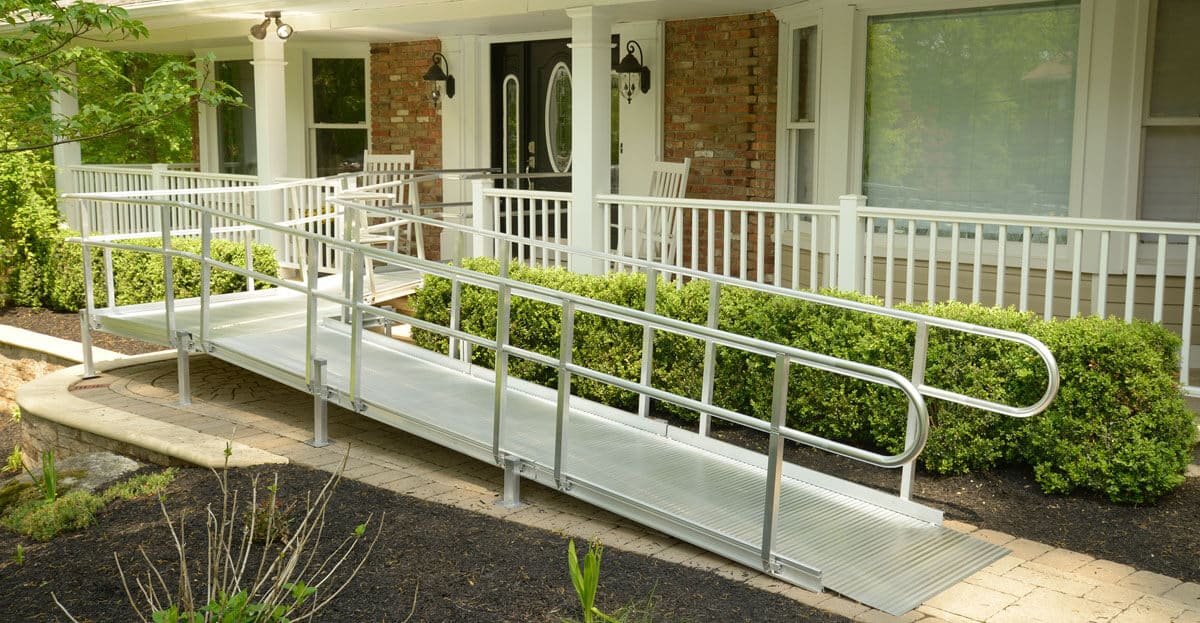
This case study examines a nonprofit program helping Guilford County’s senior homeowners safely age in place. The “Aging Gracefully” program sends a team of occupational therapists and nurses from a local nonprofit healthcare network to eligible seniors’ homes to assess their needs and determine home modifications that can prevent them from needing to move. Another local nonprofit supported by volunteers then makes the improvements, such as repairing or adding access ramps, grab bars, railings, levered door handles, and raised toilets.
Aging Gracefully is one of four programs funded and assisted by the National Center for Healthy Housing and Johns Hopkins University’s “Aging Gracefully in Place” national demonstration program (2016–2018). After the successful two-year demonstration, Aging Gracefully in Guilford County received ongoing funding and remains in operation as of September 2022.
Key takeaways
The program uses an intersectoral approach to achieve its outcomes. Aging Gracefully links housing and health care strategies, using occupational therapists, nurses, and home repair professionals to determine necessary home improvements for seniors and provide them.
Aging Gracefully provides ongoing, income-based programming for seniors at risk of being displaced. The program is available to seniors countywide. Occupational therapists’ and nurses’ services are free for eligible homeowners, and home modifications are provided at minimal or no cost, depending on the senior’s income. Once changes are complete, the program continues communicating with the homeowners to understand the improvements made in their daily living activities.
Services provided are determined in close collaboration with the senior homeowners to ensure they are engaged in improving their health and safety. The National Center for Healthy Housing (NCHH) says, “Because clients define their own goals, they are more likely to be engaged in the services and show greater function improvements.” The communication with program participants continues after home repair professionals complete repairs.
Nonprofit partnerships facilitate the successful implementation of Aging Gracefully. The local healthcare network, Cone Health, and the local nonprofit providing the home repairs, Community Housing Solutions, work in tandem to address seniors’ needs — providing an example of how collaboration can strengthen local partners’ relationships, capacity, and effectiveness.
DescriptionAging Gracefully provides an occupational therapist and registered nurse from Cone Health to conduct home visits over four months to determine the participating senior homeowner’s needs and goals to improve their daily activities and to recommend home modifications. Sessions include:
- Six one-hour occupational therapy visits to evaluate the senior’s functional disabilities and home safety risks.
- Four one-hour nurse visits to work on the senior’s pain, depression, medication, healthcare provider access, and strength and balance issues and brainstorm with the senior on ways to improve their daily function.
- Two visits from home repair professionals to provide home modifications.
Healthcare professionals conduct “a walk-through visual assessment of the general dwelling, interior floors, interior stairs and steps, kitchen, bathroom(s), and bedroom of each client’s home” using a U.S. Centers for Disease Control and Prevention’s Home Fall Prevention Checklist for Older Adults and the U.S. Consumer Products and Safety Commission’s Safety for Older Consumers-Home Checklist. The home checks are free.
Community Housing Solutions, the lead entity for Aging Gracefully, follows up with the homeowners to make the necessary modifications (e.g., improvements to reduce their risk of falling). Their home repair professionals are Certified Aging-in-Place Specialists (CAPS) through the National Association of Home Builders. Community Housing Solutions is also responsible for determining homeowners’ eligibility for the program by conducting phone screening followed by in-home visits to assess the client’s full eligibility. Seniors may pay a small fee for home repair services depending on their income level.
Aging Gracefully emerged from Johns Hopkins University’s “Community Aging in Place-Advancing Better Living for Elders” (CAPABLE) approach that pairs in-home health assessments with home modifications to address identified health and safety issues. Johns Hopkins University trained Aging Gracefully’s healthcare professionals in the CAPABLE approach over two days in person before the program started. This CAPABLE training is now offered online for others looking to implement a similar program.
Process and timeline
Highlights from the program over time include:
2003: A partnership among the Center to Create Housing Opportunities, Greensboro Housing Coalition, Habitat for Humanity of Greater Greensboro, and the City of Greensboro led to the creation of Community Housing solutions, an effort designed to address substandard housing in the region.
2014: The CAPABLE model, now implemented in over 40 locations across the country, was first tested in Baltimore, MD.
2015: Aging Gracefully’s healthcare and home repair teams were formed.
2016: NCHH and Johns Hopkins University chose the Aging Gracefully team, led by Community Housing Solutions, through a competitive process, to participate in the Aging Gracefully in Place national demonstration program for two years. Community Housing Solutions received $25,000 annually from NCHH for staff overseeing and evaluating Aging Gracefully.
2018: Community Housing Solutions completed the national demonstration program. Aging Gracefully was so successful in its first two years that Community Housing Solutions secured new funding to keep its services going. Community Housing Solutions reports its home repair funding comes from a variety of sources, including homeowner repayments of loans from another program, donated materials and professional services, contributions from philanthropy, and individual donations.
2020: NCHH published findings from the evaluation of the Aging Gracefully in Place national demonstration, highlighting the Aging Gracefully program’s outcomes.
2021: Aging Gracefully had 35 seniors enrolled.
Outcomes
Community Housing Solutions asks Aging Gracefully clients to complete three follow-up surveys to monitor and measure program outcomes. The surveys show that:
- 96 percent of homeowners are satisfied with the repairs, staff, and volunteers.
- 84 percent of homeowners have become more confident in their daily activities since the repair.
- 74 percent of homeowners believe repairs prevented a fall.
- 43 percent of homeowners report less depression.
NCHH has also evaluated the program’s early results during the national demonstration program. According to NCHH, the Aging Gracefully program’s costs from 2016 to 2018 were about $4,000 per client, most of which went to home repair. Aging Gracefully, which had separate funding to do more extensive repairs than the other three localities participating in the national demonstration program, saw more significant reductions in Activities of Daily Living (ADL) limitations. ADLs include “eight activities essential to daily self-care: walking across a small room, bathing, upper and lower body dressing, eating, using the toilet, transferring in and out of bed, and grooming.”
NCHH suggests that other programs based on CAPABLE follow the example of Aging Gracefully by pairing the CAPABLE approach with other home repairs to be more efficient. NCHH also believes service providers’ ongoing communication with clients after completing services can contribute to “positive longer-term findings.”
Policy significance
Localities can use programs like Aging Gracefully to support senior residents in staying in their homes and communities longer — strengthening their housing stability, preventing unwanted moves, and furthering equity for older adults, including many with disabilities. NCHH’s evaluation of the two-year national demonstration program reports national trends that highlight the importance of programs like Aging Gracefully:
- The National Center for Health Statistics reports that the U.S. has a growing number of seniors, and 75 percent have at least one physical function difficulty.
- AARP reports that nearly 90 percent of seniors want to live in their homes for as long as possible, which is especially challenging for those living in poverty.
- According to the U.S. Centers for Medicare & Medicaid Services, skilled nursing facilities and seniors’ acute care costs burden individuals and society: Medicaid, Medicare, and the Veterans Administration paid 55 percent of skilled nursing facilities’ fees in 2018.
- The U.S. Centers for Disease Control and Prevention reports that non-fatal fall injuries account for approximately $29 billion paid by Medicare and $9 billion by Medicaid annually.
NCHH says, “Based on our evaluation results, we believe that more widespread or even national expansion of CAPABLE would yield strong societal benefits. CAPABLE has the potential to meet a growing need in serving underserved populations.”
Localities can help fund existing nonprofits already providing programming like Aging Gracefully, encourage existing organizations to create a new program, or help set up new entities like Community Housing Solutions to provide these services. Aging Gracefully is replicable in many localities and includes several elements they should consider when engaging partners for this work and designing their program:
- Using an intersectoral approach – linking housing and healthcare
- Developing nonprofit partnerships to facilitate the program
- Continuing the engagement with clients to monitor improvements
- Providing senior-targeted, income-based programming to serve homeowners who are at risk for displacement
- Monitoring the overall program’s progress over time to course-correct when necessary
NCHH suggests that localities wishing to implement a program similar to Aging Gracefully carefully consider which organization will lead their program, how the teams will be trained, how they will coordinate with each other, and how participants will be identified and recruited. For more implementation best practices, read NCHH’s Aging Gracefully in Place: Important Considerations When Considering CAPABLE Program Implementation.
Additional information:
- Aging Gracefully in Place: An Evaluation of the Capability of the CAPABLE Approach: Findings from NCHH’s evaluation of the “Aging Gracefully in Place” national demonstration program.
- Community Housing Solutions’ Aging Gracefully Program Brochure: Quick overview of the nonprofit’s program, including eligibility requirements and program successes.
More Publications
Learn more about what The Lab has to offer.