Case Studies
Local policies that support missing middle housing and accessory dwelling units
Overview
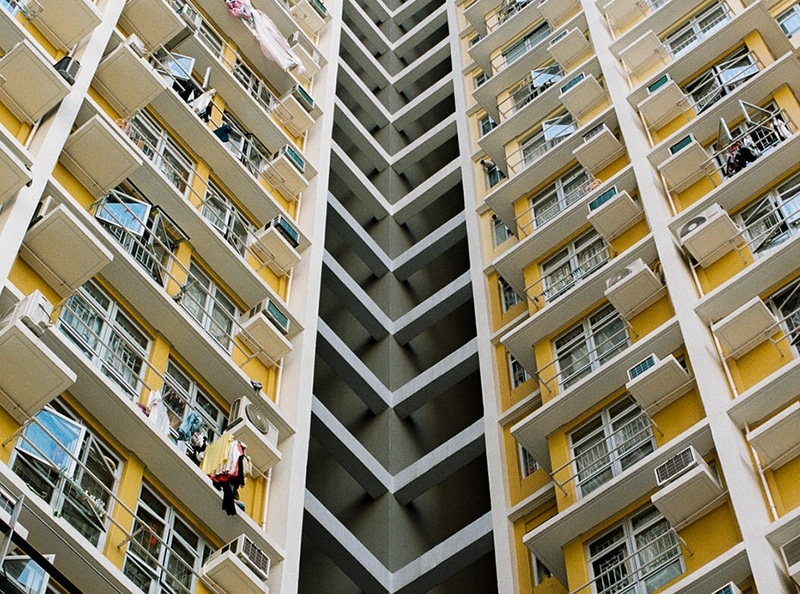
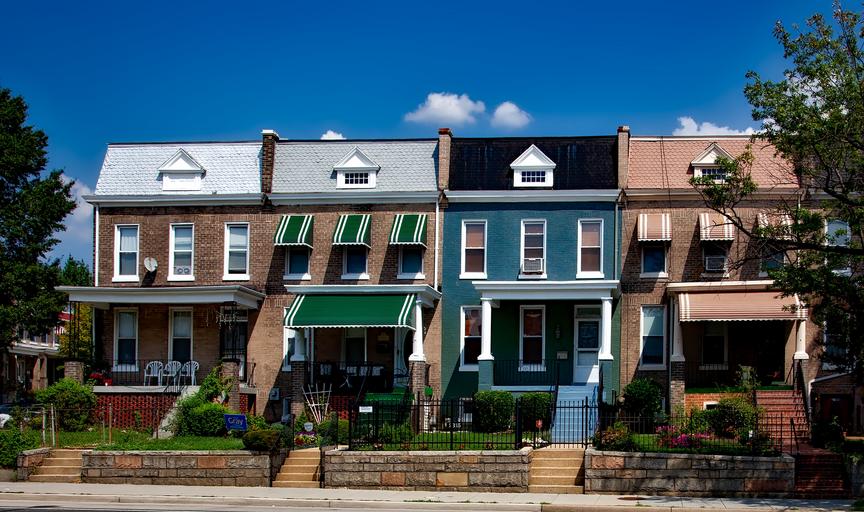
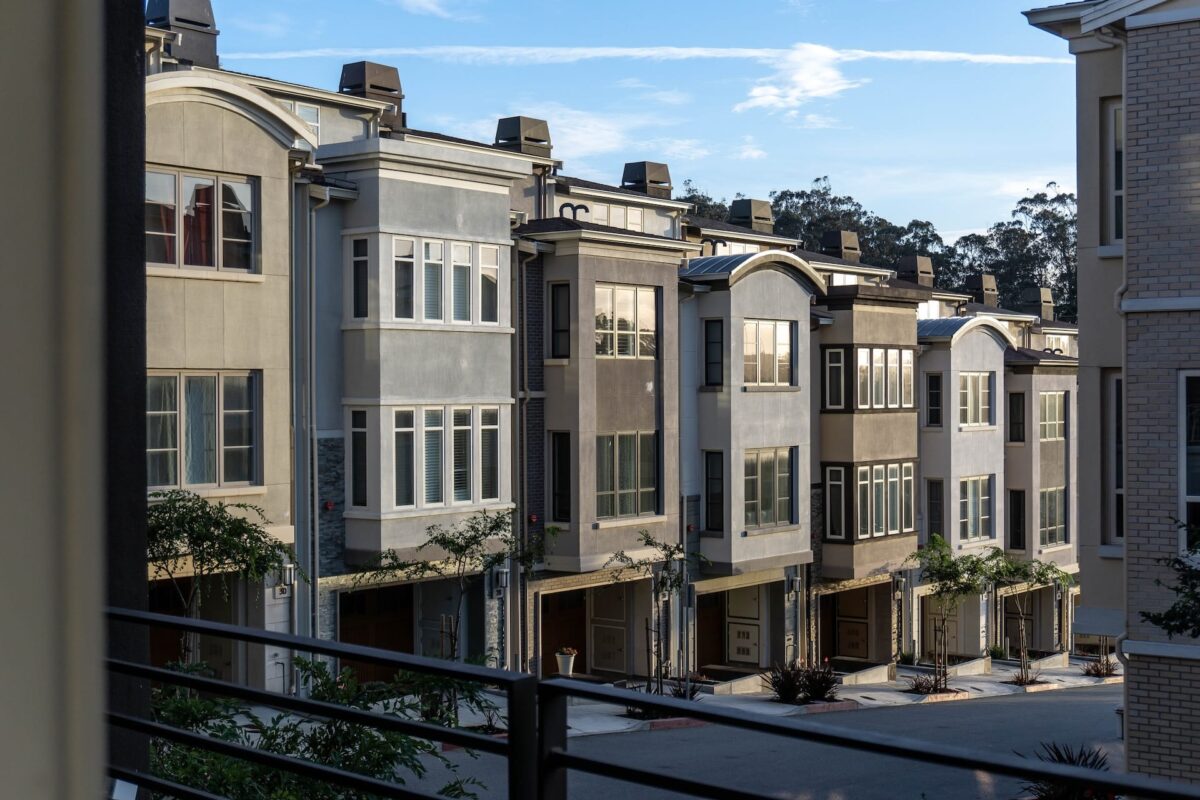
Policymakers and practitioners increasingly see developing and preserving missing middle housing and accessory dwelling units (ADUs) as an important strategy for addressing the housing affordability crisis. The term “missing middle housing” generally refers to housing types that fall in between detached single-family housing and mid-rise apartment buildings. Missing middle types include duplexes, townhomes, small multifamily units, and cottage courts, which consist of small detached units set around a central open space (the court) on a single lot.
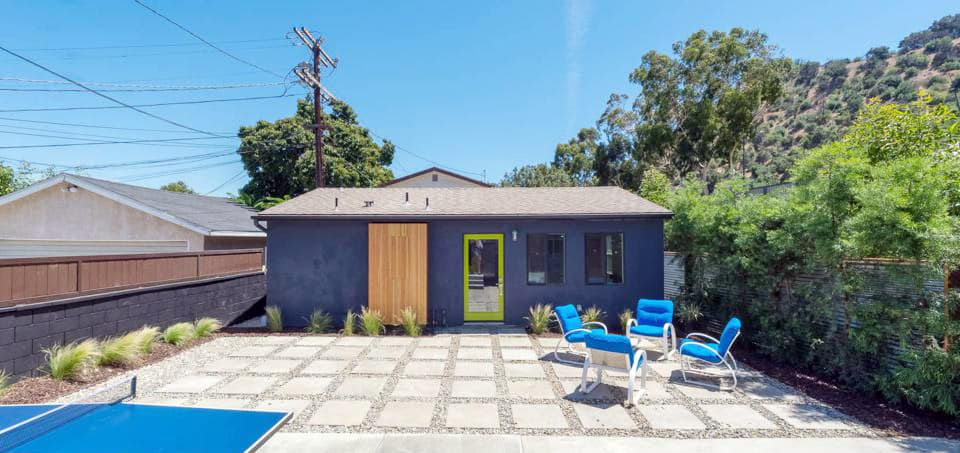
ADUs are secondary housing units attached or sited next to a primary house. While not always considered to be “missing middle” housing, ADUs function similarly and gently increase density and expand the availability of lower-cost housing types in single-family neighborhoods. Missing middle housing and ADUs tend to be more affordable than single-family homes because the units are typically smaller and multiple units share land and construction costs. Some missing middle types, including cottage courts and small multifamily, may be more affordable to build than single-family homes on a per-unit basis when economies of scale are achieved.
This brief profiles land use and other policies related to missing middle housing and ADUs in eight localities: Eugene, OR; South Bend, IN; Grand Haven, MI; Greenville, SC; Des Moines, IA; Barnstable, MA; Raleigh, NC; and Santa Cruz, CA. Each of them has taken steps to facilitate an increase in the supply of missing middle housing generally or to encourage the production of missing middle housing legally restricted to low- or moderate-income households (i.e., dedicated affordable housing).
The profiles in this brief focus on the adoption of more relaxed land use regulations and other tools that could potentially enable the development of missing middle housing and ADUs, including:
- Allowing ADUs and types of missing middle housing by right and in single-family zones, which reduces permitting time and costs and increases the amount of land available for missing middle housing.
- Increasing allowable density by allowing small unit sizes, taller building heights, and reduced setbacks, which can reduce costs by enabling more units to be built on a parcel of land.
- Reducing or eliminating parking requirements that can add thousands of dollars to the cost of a home.
- Developing tools and policies that may facilitate or expedite the construction of missing middle housing and ADUs, like pre-approved plans and tax incentives. Pre-approved plans reduce the cost of designing new homes and streamline the permitting of missing middle housing. Tax incentives may spur the development of missing middle housing, especially in areas with limited market demand for such housing, and may reduce a household’s tax burden.
These types of policy changes are becoming increasingly appealing to localities struggling with housing supply or affordability issues. Recent research has emphasized the importance of enacting more flexible zoning to allow housing types other that single-family homes, which predominate in many cities’ housing supply. Examples from California and Portland, Oregon demonstrate the promise of enabling more housing choices through relaxed regulations: California permitted over 63,000 ADUs between 2018 and 2021 after legalizing them in 2016, and a 2018 survey of ADU owners in Portland, Oregon found that 44 percent rented out their ADUs for below market value. Portland has been working since 1998 to facilitate ADU construction better.
The research team compiled information for this brief in mid-2023, primarily from land use ordinances and other publicly available resources. Population data are US Census July 2022 estimates.
Types of missing middle housing
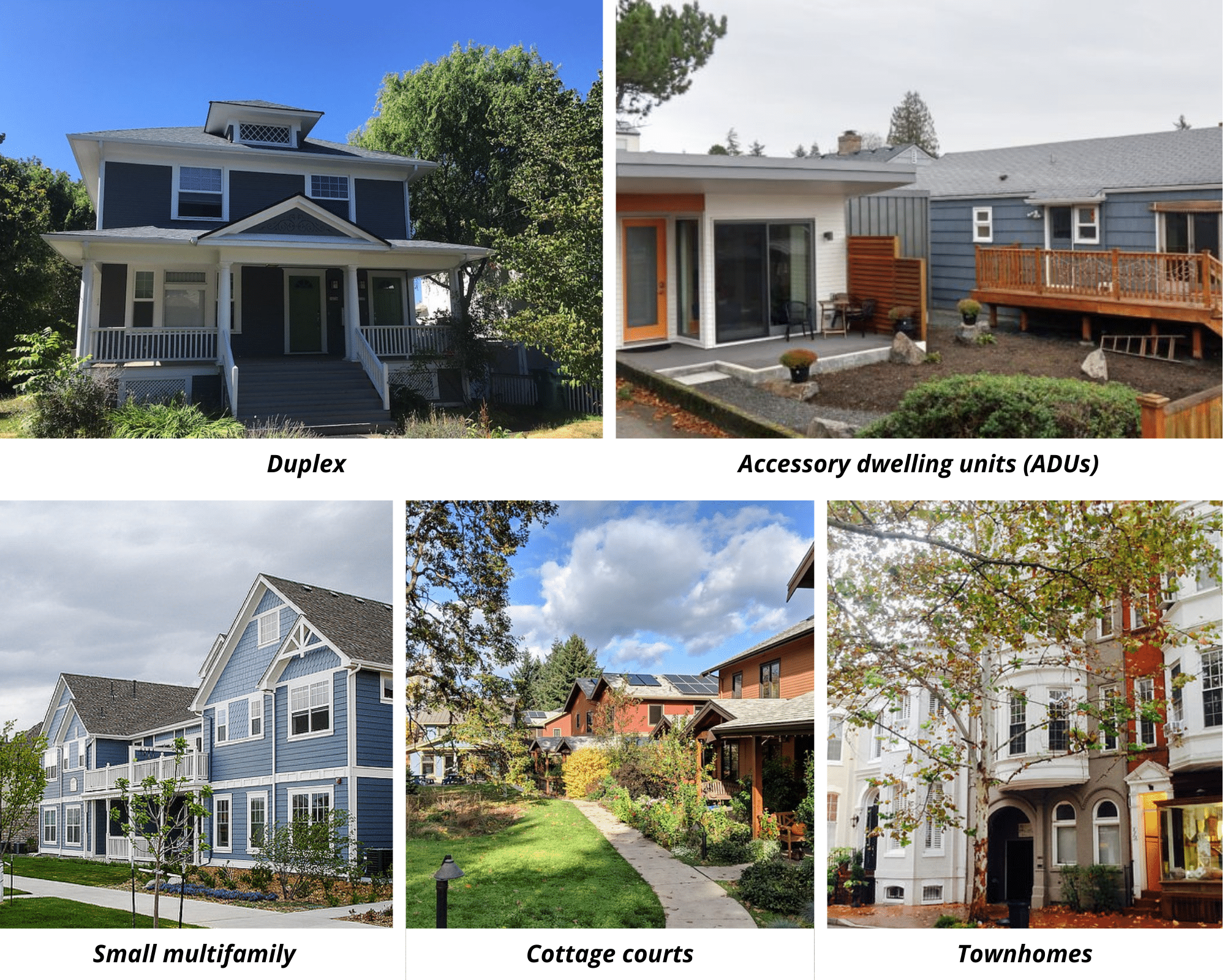
Image source: Sightline Institute. (CC BY 2.0)
Key features of missing middle housing and ADU policies in eight localities
Eugene, Oregon
Summary: Key features of missing middle housing and ADU policies in Eugene, Oregon (population 177,923):
- The city allows all missing middle housing types by right in zones previously limited to single-family housing.
- The city allows ADUs by right in all residential zones and offers pre-approved ADU plans.
- The city waives parking requirements for housing near transit stations and reduces parking for affordable missing middle housing.
Discussion: In accordance with Oregon state law HB 2001, passed in 2018, Eugene allows all missing middle housing types by right (meaning without special review by local government) in all single-family zones. Eugene allows missing middle housing types, including duplexes, cottage courts, and small multifamily buildings such as townhomes, triplexes, and fourplexes. The city defines cottage courts as developments with between four and eight detached units arranged around one or more central courtyards of 150 square feet per unit, with the average unit size not to exceed 1,400 square feet. Eugene has an expedited permitting process for land subdivision for missing middle projects, with a 21-day review period for qualifying applications.
Duplexes and triplexes in all residential areas may be built on smaller lots than are required for single-family homes (4,500 square feet minimum), and quadruplexes and cottage courts are allowed on lots as small as 4,500 square feet. Duplexes and triplexes may be built on narrower lots than are allowed for single-family homes. Small multifamily projects with an average unit size of less than 900 square feet are eligible for density bonuses and reduced lot size requirements. Eugene allows duplexes for income-qualified tenants to be built on lots smaller than the usual minimum of 2,250 square feet.
Eugene allows attached or detached ADUs by right in any residential zone. The city has also published pre-approved ADU plans and other resources to streamline the construction process for ADUs. Pre-approved plans are architectural plans provided by the city that have already undergone building permit review. Therefore, using one of these plans both quickens the building permit process and reduces pre-development costs. Other policies that make it easier to build ADUs in Eugene include: 1) ADUs require no additional parking; 2) the city does not require design compatibility with the primary structure; and 3) the city does not require owner occupancy for the ADU or the primary structure. Generally, Eugene allows a maximum size for an ADU of 800 square feet or 10 percent of the lot area, whichever is smaller. In three neighborhoods near the University of Oregon, Eugene limits ADUs to a maximum of 600 square feet if the lot is less than 9,000 square feet.
For all missing middle housing types in the city, Eugene waives parking requirements for units within a quarter mile of a transit station and reduces parking requirements for affordable (at or below 80 percent AMI) missing middle housing. For missing middle housing in other areas, the city typically requires one off-street parking space per dwelling unit, similar to single-family home requirements. However, triplexes and quadruplexes on smaller lots may have fewer than one space per dwelling unit.
South Bend, Indiana
Summary: Key features of missing middle housing policies in South Bend, Indiana (population 103,110):
- South Bend does not require parking for any land use in any of the city’s zones.
- The city provides pre-approved plans for some missing middle housing types.
- The city allows duplexes and ADUs by right in all single-family zones and has relatively small setback requirements in most residential zones.
Discussion: In 2021, South Bend, Indiana eliminated a significant barrier to constructing missing middle housing by removing minimum parking requirements citywide.
South Bend provides pre-approved plans for several housing types to encourage infill development, including duplexes, small apartment buildings, and ADUs. Building setbacks are generally consistent for single-family and missing middle housing types, though South Bend has minimal setbacks in most zoning districts.
South Bend allows ADUs to be built by right in all single-family zones. The city does not require the design of ADUs to be compatible with the primary structure but owner occupancy of either the ADU or the main building is required in two of its lowest-density suburban and urban residential zones (although not in any other zone). The city limits the size of ADUs to 75 percent of the primary dwelling’s floor area or 800 square feet in size, whichever is smaller, and requires detached ADUs to be located in the rear yard.
South Bend allows the construction of duplexes by right in all single-family zones. Duplexes in South Bend may not exceed 2.5 stories in height, but the minimum lot size for constructing duplexes varies by zone.
Cottage courts in South Bend may be constructed by right in all multifamily zones. The city allows a minimum of three units and a maximum of nine units for each cottage court, with each unit limited to no more than 1.5 stories. The units must be at least five feet apart and set back from the front border of the lot by between five and 25 feet, depending on the zone. South Bend also requires that cottage courts have a central open space of at least 18 by 20 feet.
South Bend defines small multifamily buildings as containing three or four units for apartments or three to eight units for townhomes. These buildings must not have more than three stories and their maximum height is between 35 and 55 feet, depending on the zone. South Bend allows multifamily buildings by right in the higher-density suburban zone, the two highest-density urban neighborhood zones, and four other non-residential districts.
Grand Haven, Michigan
Summary: Key features of missing middle housing policies in Grand Haven, Michigan (population 10,982):
- Grand Haven does not allow cottage courts or ADUs by right, but these housing types can be permitted in some areas. The city also allows multifamily buildings in two of its three primarily residential zones and other mixed-use zones.
- The city allows parking requirements to be reduced by 20 percent for buildings within 800 feet of public transit.
Discussion: Grand Haven, Michigan is a small city with a more moderate approach to facilitating missing middle housing. According to its 2022 land use ordinance, the city allows duplexes by right in the highest-density residential zone, and they can be permitted in low and moderate-density residential zones. Grand Haven limits duplexes to a maximum building height of 35 feet, although the minimum size of the lot where a duplex can be built varies by zone.
The city does not allow cottage courts by right in any zones, but it may allow them as a special permitted use in residential zones. Grand Haven’s planning board determines the maximum number of cottage court units allowed on a lot. The city requires that fifteen percent of the lot where a cottage court is built must be preserved as open space, and units must be set 25 feet back from all edges of the lot and spaced no less than six feet from other units.
For multifamily buildings of three or more units, Grand Haven limits building heights to 35 feet and requires all units to have at least 400 square feet of floor area. It allows multifamily buildings by right in the multifamily district, the neighborhood mixed-use district, and three other nonresidential zones. The city also allows multifamily as a specially permitted use in two further nonresidential zones and three residential ones, including a moderate-density residential district.
Grand Haven does not allow ADUs to be built by right in single-family zones but allows ADUs as a specially permitted use in two non-residential zones and all residential zones except the planned development and sensitive area overlay districts. Although the city allows a relatively generous maximum size for ADUs – either 1,000 square feet or equal to the primary dwelling’s floor area, whichever is smaller – it has other rules that govern ADU construction. It requires: 1) owner occupancy of either the ADU or the main building; 2) ADUs’ designs to be compatible with the primary structure; and 3) that ADUs not impede on neighbors’ privacy or waterfront views.
The city requires each ADU to have one parking space and duplexes to have two parking spaces per unit, but the planning committee may reduce parking requirements by 20 percent for any building within 800 feet of a transit station.
Greenville, South Carolina
Summary: Key features of missing middle housing policies in Greenville, South Carolina (population 72,310):
- Greenville’s land use ordinance incorporates form-based code elements, which enables any type of missing middle housing in residential zones that meets building envelope requirements.
- The ordinance has relatively small setbacks for most housing types, which allows more efficient land use and may make new missing middle housing more feasible.
- Parking requirements are reduced for developments with affordable units.
Discussion: Greenville, South Carolina, recently revised its land use ordinance to place greater emphasis on the form of new buildings than on specific uses. This means that a variety of missing middle types and ADUs may be constructed as long as they do not exceed site and building standards, like setbacks, heights, and the maximum share of a lot that may be built on.
Greenville has three zoning categories that are primarily residential: house-scale, neighborhood-scale, and community-scale zones. Missing middle housing types are allowed in Greenville’s three community-scale and five neighborhood-scale zones.
In the three community-scale zones, there is no maximum number of housing units per lot. Building lots must be at least 15 feet wide, and new buildings can be no wider than 175 feet in two of the zones and no wider than 275 feet in the third zone. Allowable building heights range from 30-68 feet, or 54-94 feet with a density bonus for providing affordable units or open space. Buildings can occupy 80 percent or more of a lot.
The neighborhood-scale zones also allow missing middle housing, but at a lower density. The maximum number of units per lot allowed ranges from 4 to 12 (and up to 16 units with a density bonus for providing affordable units or open space). Allowable building heights range from 32 to 42 feet, and building widths range from a maximum of 40 to 100 feet. As in community-scale zones, required setbacks are relatively small, typically 10 feet or less. Only one of the neighborhood-scale zones has a minimum lot size (2,000 square feet) for new development. Depending on the zone, buildings may only occupy from 60-75 percent of a lot, and at least 10 percent of the lot must be preserved as outdoor amenity space in four of the five zones.
Greenville allows ADUs by right in the four relatively low-density house-scale residential zones. The city limits the size of ADUs to 80 percent or less of the principal structure’s floor area, depending on the size of the principal structure itself, or to 1,000 square feet, whichever is smaller. Greenville requires one additional parking space per ADU and mandates owner occupancy of either the ADU or the primary building.
Greenville requires one parking space for missing middle units and ADUs, but that requirement is reduced to 0.5 spaces for affordable units.
Des Moines, Iowa
Summary: Key features of missing middle housing policies in Des Moines, Iowa (population 211,034):
- Des Moines is unique among the localities profiled in that it has a tax abatement available for building or improving missing middle housing and ADUs.
- ADUs are allowed without owner-occupancy restrictions.
Discussion: Des Moines, Iowa encourages the construction and renovation of missing middle housing in designated areas of the city via a 10-year tax abatement. Missing middle housing types eligible for the abatement include new or renovated buildings with 2-12 units and ADUs. A property’s assessed value must increase by at least five percent to receive the abatement.
Des Moines, according to its 2022 land use ordinance, allows duplexes and small multifamily developments (up to four units) in some but not all lower-density residential zones. The city does not allow multifamily developments of five or more units by right in lower-density residential zones but does allow them by right in transitional zones adjacent to lower-density residential zones. Des Moines also allows developments with two or more units by right in all neighborhood mix zones, which are designed for “an existing mix of residential buildings and uses or with the potential for infill of a mix of residential buildings and uses,” according to its land use ordinance. Des Moines requires one parking spot per unit for most residential uses.
The city allows ADUs by right in one downtown district and two mixed-use districts, as well as in residential districts that allow multiple units on a single lot or when the lot is within a quarter mile of a bus route. It requires the addition of one off-street parking space to the property. Des Moines limits ADUs to a maximum size of 576 square feet or 25 percent of the rear yard, whichever is greater, as long as the ADU does not exceed 50 percent of the primary building’s floor area. The city also requires that ADUs be located in the rear yard and set back at least five feet from the lot line in all directions, and that the ADU’s design is compatible with that of the primary building. Des Moines does not require owner occupancy of either the ADU or the primary building, which allows both units to potentially be rented.
Barnstable, Massachusetts
Summary: Key features of missing middle housing policies in Barnstable, Massachusetts (population 49,532):
- Barnstable’s affordability program offers no-interest loans for the construction of ADUs.
- The city allows affordable multifamily buildings by permit in certain single-family zones.
Discussion: The town encourages both the construction of ADUs and the production of affordable housing via its Accessory Affordable Apartment program, which offers deferred payment zero percent interest loans for building or rehabbing ADUs. As a condition of receiving the loan, the ADU owner must rent to an income-qualified tenant. Barnstable allows ADU construction by right in any zone and does not require additional parking. The property owner must occupy either the ADU or the primary building, and rent whichever unit they are not living in.
Based on its 2023 land use ordinance, the town does not allow duplexes by right in single-family zones. Rather, it allows duplexes by right only in two downtown mixed-use zones and portions of a third downtown mixed-use zone.
Barnstable allows multifamily housing by right in four business districts, the shopping overlay district, and the mixed-use subzone of one additional district. Density limits range from 1,500 to 5,000 square feet of lot area required per unit, depending on the zone. Barnstable also allows multifamily housing as a specially permitted use in the multifamily affordable residential zone, five of the seven Downtown Hyannis zones, and one planned unit development overlay district.
Raleigh, North Carolina
Summary: Key features of missing middle housing policies in Raleigh, North Carolina (population 476,587):
- Raleigh allows ADUs and duplexes by right in all single-family zones.
- The city offers pre-approved plans for ADUs.
Discussion: According to its 2023 land use ordinance, Raleigh, North Carolina allows ADUs by right in any residential zoning district on any lot with an existing dwelling unit. ADUs may be attached or detached units and may be located above a garage. Raleigh has pre-approved ADU plans available via their Fast Track program to facilitate construction. While the city requires that the ADU’s design is compatible with that of the primary structure, it does not mandate any additional parking for ADUs.
Raleigh allows duplexes by right in all single-family zones except the lowest-density residential zone. Duplexes may not have more than three stories, but the city does not require that they have additional parking. The city allows tiny homes with a building footprint of no more than 800 square feet and total size of no more than 1,200 square feet by right in all residential zones.
The city allows cottage courts by right in all multi-family zoning areas and all but the lowest-density single-family zones, with setback requirements that vary by zone. The maximum size of each cottage unit is 1,800 square feet, and at least 60 percent of the lot must be open space. In the R-2 and R-4 residential zones, the minimum setbacks from side streets and the rear lot line are smaller for cottage courts than for detached single-family homes.
Raleigh allows multifamily buildings with three or more units by right in the city’s highest-density residential zone, in portions of other residential zones with a transit-oriented development overlay, and in some mixed-use zones. The maximum height for multifamily buildings in residential zones is three stories, though the city allows taller building heights in mixed-use zones. Setbacks vary by zone, but front setbacks may be as small as five feet and side and back setbacks as small as zero feet.
Santa Cruz, California
Summary: Key features of missing middle housing policies in Santa Cruz, California (population 61,800):
- Santa Cruz may waive ADU development fees if property owners rent the ADU to low- or very low-income tenants.
- The city does not have parking minimums for ADUs but does have parking requirements for other types of missing middle housing.
- Setbacks in areas that allow missing middle housing are smaller than those in areas reserved for single-family homes.
Discussion: Based on its 2023 land use ordinance, Santa Cruz, California, allows ADU construction by right in all single-family zones and has taken several measures to facilitate ADU construction to improve housing affordability. The city will waive several types of development fees if the property owner agrees to rent their ADU to low-income or very low-income tenants. It will waive more fees if they rent the ADU to very low-income tenants rather than low-income tenants. Furthermore, outside of one particular zone (the Coastal Zone), the city does not require additional parking for ADUs, and any parking spots a property owner removes to accommodate the ADU do not have to be replaced.
The city only allows duplexes by right in the medium-density residential zone and two residential zones close to the waterfront, but it also allows them as a specially permitted use in some other zones. Each one-bedroom duplex unit must have one parking space, and each duplex unit that has two or more bedrooms must have two parking spaces. Duplexes may not be built on lots smaller than 4,000 to 5,000 square feet, with the exact number varying by zone.
Santa Cruz allows cottage courts by right in several multifamily and mixed-use districts, with individual units as small as 250 square feet in some neighborhoods.
For both cottage courts and small multifamily buildings, which Santa Cruz defines as having at least three units, the minimum parking requirements are the same as for duplexes, plus 10 percent of that number for guest parking if the property has more than five units. The city allows multifamily housing by right in the three multifamily zones and by right or as a specially permitted use in 16 other districts.
Minimum setbacks for front, rear, and side yards are all smaller in districts that allow missing middle housing types than in the primarily single-family residential district.
More Publications
Learn more about what The Lab has to offer.